Business Analyst Training in Germany

feature-iconCompany analysts discover areas that can be improved to increase efficiency and strengthen company operations.
feature-iconThey frequently collaborate with people throughout the organization's structure to discuss their findings and help execute improvements.
feature-iconSevenMentor provides various Business Analyst Programs that covers all the aspects necessary for job growth.

020-71171500

Start Today!

CONSULT WITH
OUR ADVISORS

  • Course & Curriculum Details
  • Flexible Learning Options
  • Affordable Learning
  • Enrollment Process
  • Career Guidance
  • Internship Opportunities
  • General Communication
  • Certification Benefits

Learning Curve for Business Analyst in Germany
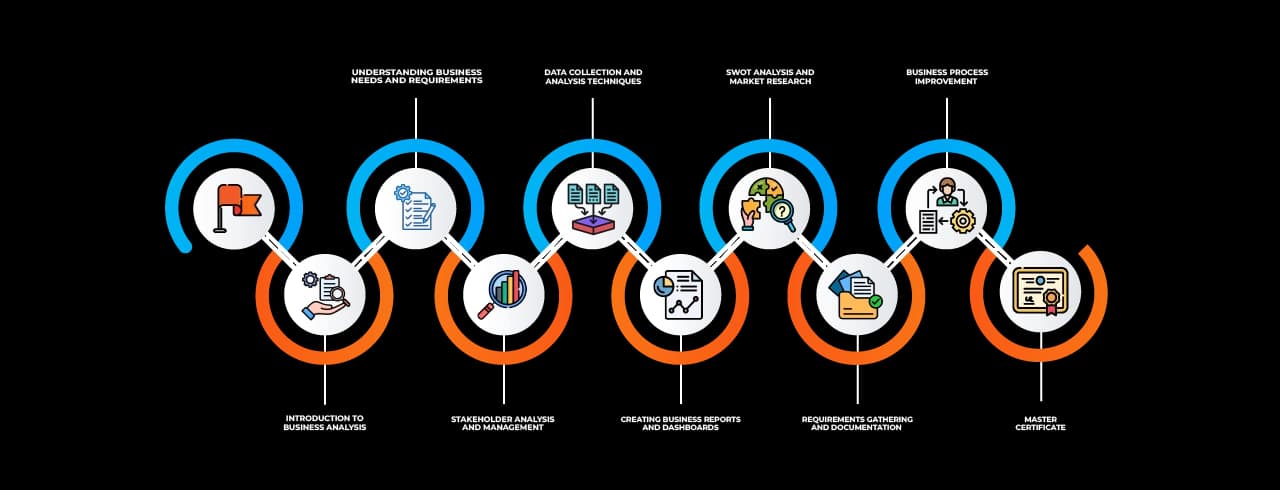
Learning curve for Business Analyst in Germany

Master In Business Analyst in Germany Course

OneCourseMultipleRoles

Empower your career with in-demand data skills and open doors to top-tier opportunities.

Business Analyst
Data Analyst
Business Intelligence Analyst
Product Analyst
Financial Analyst
Market Research Analyst
Systems Analyst
Process Analyst
Risk Analyst
Operations Analyst

Skills & Tools You'll Learn -

Python iconPythonA versatile programming language widely used for machine learning. R: A statistical computing language popular for data analysis and visualization. Scikit-learn: A powerful Python library for implementing machine learning algorithms.
Microsoft Excel iconMicrosoft ExcelSpreadsheet software for data analysis, visualization, and automation with formulas and macros.
Tableau  iconTableau Powerful data visualization tool for creating interactive dashboards and reports.
Power BI iconPower BIBusiness intelligence platform for data visualization, reporting, and analytics.
Google Data Studio iconGoogle Data StudioCloud-based BI tool for creating shareable and interactive reports.
SQL  iconSQL Language for querying, managing, and manipulating relational databases.
R Programming iconR ProgrammingStatistical computing and graphics programming language for data analysis.
SAS  iconSAS Advanced analytics and statistical software for data management and predictive modeling.
Apache Spark iconApache SparkBig data processing engine for large-scale analytics and real-time processing.
Hadoop  iconHadoop Open-source framework for distributed storage and big data processing.
KNIME  iconKNIME Open-source data analytics platform for visual workflow automation.
Alteryx  iconAlteryx Self-service data preparation and analytics tool for ETL and predictive modeling.
QlikView  iconQlikView Business intelligence tool for data visualization and associative analytics.
RapidMiner  iconRapidMiner Data science platform for machine learning, predictive analytics, and automation.
Looker  iconLooker Cloud-based BI tool for data exploration, visualization, and embedded analytics.
IBM Cognos iconIBM CognosEnterprise-level business intelligence and performance management software.

Why Choose SevenMentor Business Analyst in Germany

Empowering Careers with Industry-Ready Skills.

Specialized Pocket Friendly Programs as per your requirements

Specialized Pocket Friendly Programs as per your requirements

Live Projects With Hands-on Experience

Live Projects With Hands-on Experience

Corporate Soft-skills & Personality Building Sessions

Corporate Soft-skills & Personality Building Sessions

Digital Online, Classroom, Hybrid Batches

Digital Online, Classroom, Hybrid Batches

Interview Calls Assistance & Mock Sessions

Interview Calls Assistance & Mock Sessions

1:1 Mentorship when required

1:1 Mentorship when required

Industry Experienced Trainers

Industry Experienced Trainers

Class Recordings for Missed Classes

Class Recordings for Missed Classes

1 Year FREE Repeat Option

1 Year FREE Repeat Option

Bonus Resources

Bonus Resources

Curriculum For Business Analyst in Germany

BATCH SCHEDULE

Business Analyst in Germany Course

Find Your Perfect Training Session

Jan 4 - Jan 10

2 sessions
04
Sun
Classroom/ Online
Weekend Batch
10
Sat
Classroom/ Online
Weekend Batch

Jan 11 - Jan 17

1 sessions
12
Mon
Classroom/ Online
Regular Batch

Jan 18 - Jan 24

1 sessions
19
Mon
Classroom/ Online
Regular Batch

Learning Comes Alive Through Hands-On PROJECTS!

Comprehensive Training Programs Designed to Elevate Your Career

Customer Relationship Management (CRM) Analytics

Customer Relationship Management (CRM) Analytics

Employee Performance & HR Analytics

Employee Performance & HR Analytics

Financial Risk Assessment Model

Financial Risk Assessment Model

Sales Performance & Forecasting Dashboard

Sales Performance & Forecasting Dashboard

Supply Chain Optimization System

Supply Chain Optimization System

No active project selected.

Transform Your Future with Elite Certification

Add Our Training Certificate In Your LinkedIn ProfileLinkedIn

Our industry-relevant certification equips you with essential skills required to succeed in a highly dynamic job market.

Join us and be part of over 50,000 successful certified graduates.

Student 1
Student 2
Student 3
Student 4
Student 5
Join 15,258 others learning today
Certificate Preview

KEY Features that Makes Us Better and Best FIT For You

Expert Trainers

Industry professionals with extensive experience to guide your learning journey.

Comprehensive Curriculum

In-depth courses designed to meet current industry standards and trends.

Hands-on Training

Real-world projects and practical sessions to enhance learning outcomes.

Flexible Schedules

Options for weekday, weekend, and online batches to suit your convenience.

Industry-Recognized Certifications

Globally accepted credentials to boost your career prospects.

State-of-the-Art Infrastructure

Modern facilities and tools for an engaging learning experience.

100% Placement Assistance

Dedicated support to help you secure your dream job.

Affordable Fees

Quality training at competitive prices with flexible payment options.

Lifetime Access to Learning Materials

Revisit course content anytime for continuous learning.

Personalized Attention

Small batch sizes for individualized mentoring and guidance.

Diverse Course Offerings

A wide range of programs in IT, business, design, and more.

Course Content

About Business Analyst

The evolving digital economy demands a new breed of professionals who can act as the bridge between technical teams and business stakeholders. In this landscape, Business Analyst Classes in Germany have gained significant traction due to the increasing demand for skilled professionals who can align IT solutions with business strategies. Germany, being one of the leading economies in Europe, has seen rapid digital transformation across industries, creating a fertile environment for Business Analysis as a career path.

Business Analysts play a pivotal role in streamlining operations, enhancing productivity, and implementing strategic changes. They identify business needs, assess the impact of changes, capture and document requirements, and support the communication between stakeholders. Therefore, enrolling in Business Analyst courses in Germany can significantly enhance one’s capability to understand and improve organizational performance.


Understanding the Core Structure of Business Analyst Training

The curriculum of SevenMentor’s Business Analyst training in Germany typically blends technical concepts, analytical tools, and strategic business knowledge. A standard course is structured around several fundamental components including requirements gathering, stakeholder communication, data analysis, business process modeling, use case development, and solution assessment.

A significant focus is placed on mastering the Software Development Life Cycle (SDLC) and different project management methodologies like Agile, Scrum, and Waterfall. Trainees are introduced to industry-standard tools such as Microsoft Excel, SQL, Tableau, Power BI, and business modeling tools like BPMN. These tools are crucial in analyzing business trends, visualizing data, and interpreting insights to support decision-making.

Along with these technical proficiencies, the Business Analyst Classes in Germany also emphasize soft skills development. Communication, negotiation, and critical thinking are integrated into the training modules to ensure participants can effectively collaborate with cross-functional teams and stakeholders. The ability to write clear business requirements and create impactful presentations is a key takeaway from these programs.


Relevance of Business Analyst Skills in the German Market

Germany's industrial base spans manufacturing, finance, logistics, healthcare, automotive, and technology. Each of these sectors is undergoing substantial digital transformation. The need to integrate modern solutions such as ERP systems, CRM platforms, and data analytics into traditional business environments has created a huge demand for Business Analysts.

Participating in Business Analyst courses in Germany prepares individuals to contribute meaningfully to transformation initiatives across such sectors. The skills developed are highly transferable, allowing professionals to work in consulting, product management, operations, or IT departments. Graduates from these courses often secure roles such as Junior Business Analyst, Systems Analyst, Product Analyst, and eventually grow into positions like Senior Business Analyst, Project Manager, or Solution Architect.


Pedagogy and Learning Outcomes

The pedagogical approach in Business Analyst Classes in Germany is designed to simulate real-world business scenarios. This ensures that students are not only gaining theoretical knowledge but also applying it through practical exercises, case studies, and capstone projects.

Understanding the function of a business analyst is frequently the first topic covered in classes. This is followed by exposure to case studies from the industry that involve process enhancements and the deployment of systems. Students are expected to complete gap analyses, write requirement specifications, and create project charters. By the completion of the course, students are prepared to carry out SWOT assessments, interview stakeholders, and create business models that support organisational objectives.

Additionally, classes frequently get students ready for internationally recognised certificates like the IIBA's ECBA, CCBA, and CBAP. Employability in the German and larger European labour markets is further improved by this certification ready.


About SevenMentor 

SevenMentor the best training institute for Business Analyst Training, stands out for its industry-aligned curriculum and experienced faculty. The institute is known for blending academic depth with practical application, enabling learners to gain job-ready skills that align with the current market demand.

What sets SevenMentor apart is its commitment to practical training. Through a mix of theoretical lectures, real-time projects, and mentor-led workshops, the program ensures comprehensive exposure to the tools and techniques used by Business Analysts globally. The course structure is periodically updated based on industry feedback, maintaining its relevance in a fast-changing market.

SevenMentor also provides placement assistance, mock interviews, and resume-building sessions to ensure learners are fully prepared to enter the workforce immediately upon completion. Their strong alumni network and tie-ups with companies across Germany enhance the chances of securing relevant job roles.


Tools and Technologies Covered

The Business Analyst training in Germany at SevenMentor includes hands-on sessions with essential tools. Excel is used for data manipulation and what-if analysis; SQL is taught for querying relational databases. Visualization tools like Tableau and Power BI help present data-driven stories to stakeholders. JIRA and Confluence are also part of the course for Agile project management.

The ability to work with data is crucial for Business Analysts. Therefore, a foundational understanding of data structures, basic statistics, and visualization principles is imparted. Students also learn how to develop use cases, functional specifications, and test cases, thereby supporting the implementation and validation phases of software projects.


Capstone Projects and Industry Exposure

To bridge the gap between theory and real-world practice, students enrolled in Business Analyst Classes in Germany are often required to complete capstone projects. These projects involve identifying a real business problem, gathering and analyzing data, proposing feasible solutions, and presenting results in a business-case format.

Some training providers collaborate with industry partners to offer internships or project-based assignments. These partnerships offer insights into business processes across different sectors including fintech, logistics, retail, and healthcare. This industry exposure helps students gain confidence and practical knowledge, making them more attractive to potential employers.


The Importance of Business Analysis in Digital Transformation

Germany is a global leader in innovation, and its companies are increasingly adopting digital technologies. Whether it's automating supply chains or transitioning to customer-centric business models, these initiatives require well-planned strategies driven by data and insight. Business Analysts play a critical role here by acting as the conduit between the technical teams and business stakeholders.

The Business Analyst training in Germany enables professionals to contribute meaningfully to such digital initiatives. By identifying inefficiencies, forecasting business outcomes, and recommending technology solutions, trained Business Analysts become central to strategic decision-making processes.

Business Analysis is an essential discipline for organizations seeking to enhance operational efficiency, adopt new technologies, and maintain a competitive edge in the global market. With Germany’s growing demand for digital transformation, enrolling in Business Analyst courses in Germany can significantly uplift one’s career prospects. These courses equip professionals with a unique blend of business acumen, technical knowledge, and analytical capabilities, making them indispensable assets in any modern enterprise.

Whether you’re a recent graduate or an experienced professional looking to switch domains, attending Business Analyst Classes in Germany offers a structured and strategic pathway to career success. Institutions like SevenMentor the best training institute for Business Analyst Training provide a robust learning platform that ensures technical proficiency and practical experience.


Online Business Analyst Training

SevenMentor offers online Business Analyst training in Germany without compromising on quality or depth. The online course includes live instructor-led sessions, hands-on exercises, recorded lectures, and interactive Q&A rounds. Online participants get access to the same curriculum, tools, and certification opportunities as classroom learners. Additionally, dedicated online forums and mentorship sessions ensure continuous support throughout the learning journey.

SevenMentor’s online platform also includes real-time projects, simulations, and evaluation modules that mimic the demands of real-world business environments. Upon completion, learners receive certificates that are widely recognized across industries.


Corporate Business Analyst Course

SevenMentor also offers corporate Business Analyst courses in Germany a. These customized programs are designed to suit the business context, industry vertical, and strategic goals of the company. Corporate Business Analyst Classes in Germany can be delivered on-site or online, depending on organizational requirements. The training modules are adapted to include company-specific use cases, internal processes, and technology stacks. This tailored approach ensures that employees can immediately apply their learning to solve business challenges.

SevenMentor's corporate training offerings are led by domain experts and senior Business Analysts with extensive industry experience. Post-training, organizations report improved project delivery, better stakeholder alignment, and a stronger analytical culture. As digital transformation continues to reshape industries, upskilling teams with structured Business Analyst training in Germany is not just beneficial but essential.

Frequently Asked Questions

Everything you need to know about our revolutionary job platform

1

Is being a business analyst an IT job?

Ans:
Business analysts can work in IT, but not necessarily. Business analysts in other industries are not often involved in IT, but they may require some knowledge of the subject.
2

Is becoming a business analyst a coding job?

Ans:
Business Analysts work with IT workers and procedures. They do not, however, participate in coding or programming; that is the responsibility of programmers. Functional testing, requirements formulation, and management are all responsibilities of business analysts.
3

What qualifications do business analysts have?

Ans:
AI Overview Plus 3 To work as a business analyst, you normally require a bachelor's degree in a relevant discipline, such as business or IT. You should also be proficient in fundamental technical skills, data analysis, and communication.
4

Which is preferable, BA or developer?

Ans:
The business analyst job is more suited for individuals who prefer taking the lead in a process, whereas the software development role is better suited for those who enjoy getting into the weeds of a process.
5

Is the position of business analyst entry-level?

Ans:
A career path for business analysts You may get entry-level work as a junior business analyst, or you could explore into finance or accounting. As you gain expertise, you may decide to specialise in a certain area of business, such as marketing or sales, or a sector, such as healthcare or computing.
6

Is Excel used by business analysts?

Ans:
Although professionals working in this industry use a variety of tools, platforms, and apps to manage data, Excel is a constant that nearly every Business Analyst uses. Business Analysts must be proficient in creating, formatting, and manipulating spreadsheets.
7

How much SQL is required by a business analyst?

Ans:
To do their duties properly, business analysts need to be familiar with SQL fundamentals. SQL is a common language used to interface with databases. It is a necessary tool for business analysts to access, retrieve, and analyse data.
8

How to Become a Business Analyst?

Ans:
A business analyst must have a combination of education, abilities, and experience. You can also obtain qualifications by taking courses or receiving certifications.
9

Do require an MBA to be a business analyst?

Ans:
While a bachelor's degree may suffice for an entry-level position, some employers prefer to hire candidates with an MBA. Business analyst applicants with advanced degrees are more likely to find work. There are other reasons to pursue an MBA.
10

What skills do business analysts need for placement?

Ans:
Key skills required for a Business Analyst position include strong data analysis abilities, proficient communication, problem-solving skills, business process modelling, data visualisation, domain knowledge, documentation, critical thinking, SQL proficiency, and the ability to clearly present complex information to stakeholders; demonstrating a strong understanding of business processes and how to identify areas for improvement is essential.
11

What really are the benefits of being a business analyst?

Ans:
A business analyst position provides numerous benefits, including strong career growth potential, diverse skill development in both technical and business domains, the ability to influence strategic decision-making, excellent communication and collaboration opportunities with various stakeholders, and a direct impact on improving business efficiency through data analysis and problem-solving.
12

What are a business analyst's top three strengths?

Ans:
A good business analyst must possess critical thinking, problem-solving skills, and decision-making abilities.
13

Who makes a good BA?

Ans:
A good business analyst has the proper talents. Some are soft, interpersonal talents; others are analytical modelling and structuring abilities. These comprise a "toolkit" from which the Business Analyst may draw as needed. Facilitation, negotiation, active listening, and presentation are all examples of soft skills.
14

What is the role of an ERP Business Analyst? What does it mean to be an ERP analyst?

Ans:
An ERP analyst is a business-savvy IT specialist who works on the development and maintenance of the Enterprise Resource Planning (ERP) program. ERP programs combine procedures and data from several divisions inside a firm. ERP analysts tailor the software to the company's requirements.
15

Is a business analyst an IT position?

Ans:
Yes, a business analyst can work in IT, especially if they specialise in IT business analysis. corporate analysts work across disciplines to improve corporate efficiency by bridging the gap between business and technology.
16

Is working as a business analyst a lucrative profession?

Ans:
Yes, business analysts can earn a lot of money, especially if they have the right abilities and expertise.

Explore Other Demanding Courses

No courses available for the selected domain.

Business Analyst Training in Germany | SevenMentor