What Does the Full Stack Developer Course at SevenMentor Cover?
The Full Stack Developer Course offered by SevenMentor helps learners to build web applications from the ground up, without getting into too much theory from day one of the course. Simple examples are explained first so that learners can get to know how a web page is loaded and how data is transferred from the browser to the server and then gradually get into complex code. This course is ideal for both beginners and those looking to make a change to full-stack development, as it enables students to get into the full-stack logic very quickly.
As you progress through the course, you get development as it enables students to get into the full-stack logic very quickly.
- HTML and CSS for page design and styling
- JavaScript and modern front-end frameworks
- Back-end fundamentals and server-side logic
- API integration and data handling
- Database design and querying
- Authentication and session management
- Git-based version control
Almost all of the examples given in this course are industrial-type examples. For example, there is a login page example, user dashboard example, a small admin panel example etc. All these examples are broken down into very small to-do tasks.
All examples are industrial-type examples. Such examples include building a login page, creating a user dashboard, creating a small admin panel, etc. Each and every task is then broken down into smaller tasks. Just like developing a style for design or writing a function, learning takes place all the time, and the learners can learn at whatever speed they want. It does not matter if you are a beginner programmer or a professional one; you will have an easy time learning full-stack development skills without any hassles.
Why Are Full Stack Developer Skills in Demand Currently?
Companies no longer require specialists. They are seeking out qualified and trained developers that can help to see a project through from start to finish. With full-stack training becoming a highly regarded area of study for developers, is there still a huge demand for the well-rounded developer? In short, yes.
Here's why demand keeps climbing:
- Digital adoption has increased dramatically since the start of the pandemic, and in some industries, it has even increased by years for projects that were previously due to start in the near future.
- Companies need developers who can design, deploy, and scale applications independently
- Tech, finance, retail, and service industries are but a few examples of a wide variety of companies actively hiring full-stack developers.
- Full-stack developers help in reducing the number of handoffs that occur between different kinds of developers that a firm generally employs. This implies that rather than employing 3-4 specialists in development, a company will only require employing 1-2 full-stack developers.
- Firms are required to be able to complete the projects in shorter periods of time, without compromising on the quality of code they usually expect from their developers.
Taking full-stack developer classes will allow you to get a good base knowledge of all the different tools and techniques, knowing how to develop databases, servers, APIs, and UIs rather than taking a typical course that will teach you just a part that may be used by developers to complete the project. Once you’ve completed the course, you’ll have gained real skills that can be applied to any task that a full-stack developer might encounter.
The perception of full-stack capabilities in employers has shifted in recent years, from being seen as an added bonus for developers to now being a basic expectation. This is why it is very important for learners to learn full-stack skills in a well-structured training program such as our Full Stack Developer training, which focuses on providing learners with a practical understanding of the skills needed to complete real-world development projects. The key to learning full-stack development is to gain enough understanding of how all the different layers of a web application work together to ship a working product, rather than to simply learn more and more different technologies.
What Makes SevenMentor's Full-Stack Program Special?
The Full Stack Developer Course is special because of its emphasis on “doing” rather than just listening to lecture videos. Every class allows the student to code, test, and debug his/her own code, and therefore the examples of real-world projects like form creation, validations, routing, connecting a database to the frontend, etc. will last long in his/her memory.
What sets the learning experience apart:
- Smallest possible batch sizes, so you get the individual attention you need.
- Practical Exercise - Short & to the Point: A short practical session just after completion of the module in question to reinforce what you have learned through the module. This ensures you do not get stuck in passive learning.
- We are available for support outside class hours when you are stuck on a bug.
- Guidance on Git usage, resume building, and interview preparation
- A steady learning pace of a few hours a day to go through the program to learn to be a solid developer first.
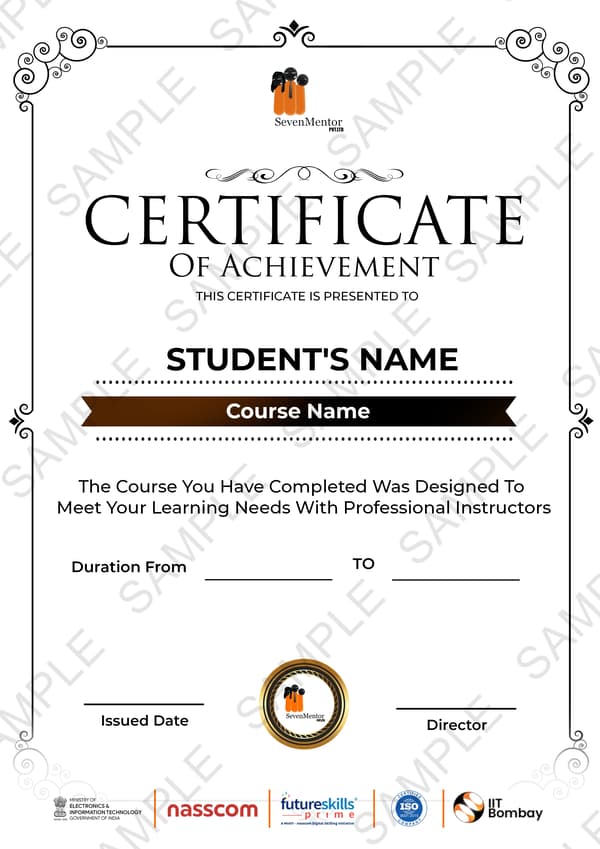
In the class, students frequently share their code and get it reviewed by others, work together to debug a screen, or study for technical interviews together. This type of support is very easy to find in a classroom full of other students, but it is very hard to find when taking online courses and learning on your own. Even after the scheduled class hours have ended for the day, SevenMentor’s trainers are available to support the students who are taking the Full Stack Development Certification course.
All this is to reinforce the key principle of full-stack development. While memorizing a large amount of syntax can be part of learning to develop, it is by no means the main part. The main part is developing an intuition for how to break down very large problems into much smaller, manageable pieces. We’ve taught a lot of students full-stack development in the past, and all of them have said that our teaching approach is friendly and very effective, despite the fact that we have taught them to handle really difficult tasks to develop in the real world.
What Will You Learn in the Full Stack Developer Program?
The Full Stack Developer Course curriculum at SevenMentor follows a logical sequence to learn and implement each feature of full stack. First the fundamentals of the subject are taught, and then gradually the learner moves to implement a complete project from scratch, which can be deployed to production. Just like a real-life development environment.
Here's the topic flow you'll follow:
- Page structure with HTML and styling with CSS
- Core JavaScript and programming logic
- DOM handling and browser-level interactions
- Front-end frameworks for building dynamic interfaces
- Back-end development basics and server-side thinking
- Working with APIs for data exchange
- Database design, queries, and management
- Authentication and session handling
- Testing, debugging, and deployment practices
- Version control using Git
- A capstone project reflecting real industry workflows
Each module is followed by a short task. For example, after learning to add a page structure with HTML, you will immediately practice styling the newly created section with CSS. Then, after learning core JavaScript and basic programming logic, you will immediately practice DOM handling and browser-level interactions. Once you grasp the front end using a framework for dynamic user interfaces, you can immediately put your hands on your back end. Create a server-side for your web application. Work with APIs. Create a database. Write queries. Manage data. Implement authentication and session handling. Test and debug your application. Deploy it. Use version control with Git.
You will learn to recognize all these concepts and use them again and again during your full-stack training program. Thus, the knowledge will stick because you practice steadily while going through the program. When you complete the Full Stack Developer Course, you will be able to build and deploy a fully functional application on your own and explain how other applications work as well.
Career Opportunities and Salary Prospects after This Course
Once you go through full-stack developer training, then all the hiring paths, both for front-end and back-end, become accessible to you.
Most developers start off immediately fixing bugs, building out small features, or even just designing out a new page. But as they develop in experience and build out more and more complex projects, they naturally graduate into owning more and more complex APIs, databases, and entire modules of a web application.
Common roles after the course include:
- Full Stack Developer
- Front End Developer
- Back End Developer
- Web Developer
- UI Developer
- JavaScript Developer
- Software Developer (Entry Level)
- Application Support Developer
As you get more experience working on projects at university, you can go up the ladder to senior developer, module lead, or technical consultant roles. Hence, this is a very practical Full Stack Development Certification course that does not limit your career options to a single job role.
As for the salaries, the junior developers / freshers are paid anywhere between 3 LPA and 5 LPA. As the developer does more projects and gains more experience in the field, his salary would increase to 6 LPA to 10 LPA or more based on how well the developer is at frameworks and deployment.
The salary depends on a number of factors, including the location, prior experience, and ability to independently manage a full stack of development. However, there is constant demand for end-to-end development management at every level of the industry, and so full-stack development roles remain consistently in demand.
Are Online Full Stack Development Classes Available?
Yes, SevenMentor offers full-stack classes live online. If you have work, studies, or other commitments to fulfill, then our online classes are ideal, as they are just like a real class and are delivered live by a trainer. They are not pre-recorded and hence offer a lot of interactivity with the trainer and fellow students, as is the case with a real classroom.
Here's what the online format includes:
- Live screen-sharing for real-time debugging support
- Ask trainers to repeat/clarify any concept.
- Hands-on coding practice during the session itself
- Access to recordings for any session you miss
- Shared project files matching what classroom batches use
This is suitable for two kinds of learners. Complete beginners who are used to a more paced study plan and working professionals with tight schedules who need flexibility in timing but deep study material. Even when we conduct online sessions, as opposed to pre-recorded videos, you have learning that happens in real time. So you get to ask and clarify any doubts as they arise, and we help you to debug your code in real time, for the first time, as you learn to build and deploy an application from the ground up.
The online version of our Full Stack Developer Course is similar to our in-classroom full stack courses and is project-based. The only difference is that you can attend them from the comfort of your home / office at any time and place. You can attend them after work or in between other courses that you are taking. The objective of the online course is the same as in-classroom courses, and that is to help you to learn and to help you to progress steadily and to get you to develop and to deploy a full-fledged application. Everything will be there to assist you in overcoming whatever hurdles may come your way during the process of debugging.
How Do the Concerns Associated With Training Courses Get Tackled by SevenMentor in Its Full Stack Course?
As you may know, feedback matters. So we have designed our Full Stack Developer Course at SevenMentor with key concerns that people have regarding training institutes. Inconsistency in the way a course is being delivered, lack of clarity on placement support that the training institute promises, and last but not least, the greatest fear that training can change dramatically even before the course begins.
Here's how these concerns are handled:
- Small batch sizes—No one is rushed through their concepts while a larger group is trying to keep up.
- All the support required for placement—mock interviews, resume help, interview scheduling, etc.—is part of the Full Stack Training program.
- No last-minute changes in the program—whether you join offline full-stack development classes or online full-stack development classes, the mode of study you join is the mode of study you complete in.
- Trainer consistency—Our trainers remain with a batch of students throughout their full stack development certification program.
- Real hours of study, not cut short—We deliver the hours of study that you were promised when you enrolled in the course, and we also post the class recordings so that you can refer to them as and when required.
SevenMentor follows a long-term commitment model to deliver a full stack classes program; hence, the batch is treated as a long-term commitment and not as a one-time transaction. Students are provided with a program that delivers what it promises, i.e., steady learning, support to get placed, and a right learning environment where support does not disappear once the student starts the course.
Which complementary skills pair well with full-stack development?
While the Full Stack Developer Course is designed to give you a solid grounding in everything you need to know to build and deploy complete web applications, there are many skills that you can layer on top to give you an edge in the job market. A skill that layers on top of your full-stack knowledge can enable you to jump straight into more advanced and higher-paying roles.
Here are skills that work particularly well alongside full-stack development:
- Data Science — build web applications that are based on data and turn information into features of your product.
- Data Analytics—to analyze user behavior and application performance, and make informed product decisions
- Python — A very common programming language for the backend of a website, especially if the website deals with lots of data or needs to integrate with AI and Machine Learning.
- Cloud Computing — to be able to deploy and run full-stack web applications in a production environment.
- Cyber Security — to secure web applications against vulnerabilities as they go live.
- SAP — useful for building enterprise-level solutions within larger organizational systems.
- Generative AI & AI Course — to build very intelligent and adaptable web applications as opposed to the typical web applications.
- ChatGPT Course — to learn to integrate chatbots into web applications.
- DevOps — for continuous integration and deployment of your web application.
- Power BI — to create easily understandable application insights in the form of so-called data visualization dashboards.
- Salesforce — for web applications of the CRM (Customer Relationship Management) type, used in sales departments and customer service.
- Java — A very common programming language for large-scale web applications for very large enterprises.
Adding any of these skills to your Full Stack Training will open up even more possibilities for projects and even more jobs for which you will be eligible after completing the course.
Got Questions? Here Are Some FAQs
1. What is a Full Stack Developer Course?
A Full Stack Developer Course teaches front-end and back-end technologies in order to build complete web applications from start to finish. This can include the User Interface as well as the Server and Database for an application. Typically the front-end is what the User sees when they browse the web, and the back-end is what processes the information submitted from the front-end, as well as what stores information about the User and their use of the web application in a database.
2. How long does it take to complete a Full Stack Developer Course?
The duration of the courses can vary between 3 to 9 months depending on if you are taking a full-time or part-time course, or even a bootcamp style or online self-paced learning style.
3. Do I need prior coding experience to join?
Most Full Stack Developer Courses for beginners start from the basics such as HTML and CSS. Thus, a Full Stack Developer Course is ideal for anyone with basic computer knowledge and sufficient time to learn and complete the course.
4. What is the average salary after completing this course?
Salaries for full stack developers can vary based on several factors, including the specific location in which you’re working as well as your level of experience. Since a full stack developer is able to handle both front-end and back-end aspects of web development, this makes for a very valuable employee. As a result, the average salaries for full stack developers are often similar to or greater than average salaries for other IT positions.
5. What is the best Full Stack Developer Course for beginners?
The best course depends on your learning style and goals, but a good one typically includes hands-on projects, mentorship support, placement assistance, and covers both MERN (MongoDB, Express, React, Node) or MEAN (MongoDB, Express, Angular, Node) stacks along with real-world portfolio building.
blog Links:
Anthropic AI Tool
What is Writesonic
What is Claude AI
AI Engineer Roadmap
What is JasperAI
What is Copy AI
Do visit our channel to know more: SevenMentor
 Learn To Build Scalable Web Applications at SevenMentor Institute’s Full Stack Training
 Accelerate Your Career and Secure High-Paying Jobs After Industry-Relevant Certification
 Master Frontend, Backend, and Database Technologies for End-to-End Development
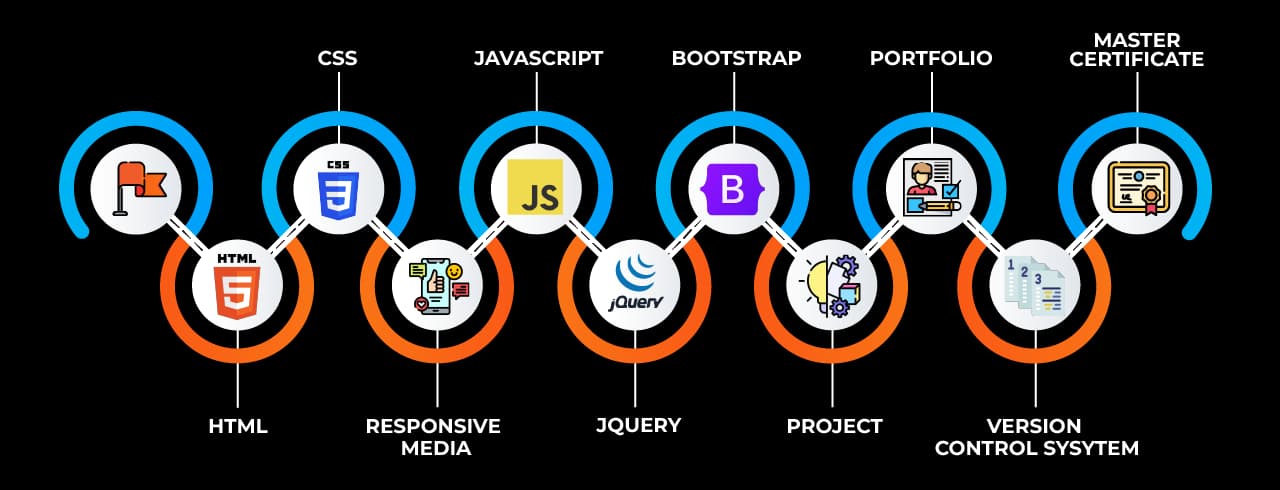
 HTML The core language for structuring web pages.
 React.jsDevelop dynamic and high-performance front-end applications using the React.js library
 JavaScript Add interactivity and dynamic behavior to web applications using JavaScript programming.
 CSS3Style and enhance web pages with CSS3, including responsive design, animations, and flexible layouts.
 Bootstrap Utilize Bootstrap to build mobile-first, responsive websites with pre-designed components and a grid system.
 React Router DOMManages navigation and routing in React applications for seamless page transitions.
 React BootstrapA combination of Bootstrap and React components for smoother UI integration.
 Tailwind CSSA utility-first CSS framework that simplifies styling with pre-defined classes.
 React-IconsA library that provides various scalable vector icons for React applications.
 NPM A package manager for installing and managing JavaScript libraries and dependencies.
 Body-ParserA middleware that parses incoming request bodies in Express applications.
 Cookie-ParserA middleware for handling and parsing cookies in Express applications.
 MiddlewareFunctions in Express that handle requests before reaching the main route logic.
 Axios A JavaScript library for making HTTP requests to fetch or send data from APIs.
 Fetch methodA built-in JavaScript method to retrieve data from APIs using HTTP requests.
 React HooksSpecial functions like useState and useEffect that enable state and lifecycle management in React.
 Websockets A protocol that enables real-time communication between the server and client.
 GraphQL A query language that allows fetching precise data from APIs, improving efficiency.
 Visual Studio Code A lightweight, feature-rich code editor widely used for web development.
 Google ChromeA popular web browser with developer tools for debugging and performance analysis.
 Node JSA runtime environment for server-side JavaScript execution.
 Express JSA lightweight framework for building Node.js web applications.
 MongoDB A NoSQL database used to store data in a flexible, JSON-like format.