Mobile App Development Training in Nigeria
 Developing software for mobile devices involves design, coding, testing, and deployment.
 Mobile app development creates software for mobile devices, focusing on mobile platforms.
 The process includes defining the app's goal, designing UI/UX, developing, testing, and publishing it to app stores.
Start Today!
CONSULT WITH OUR ADVISORS
- Course & Curriculum Details
- Flexible Learning Options
- Affordable Learning
- Enrollment Process
- Career Guidance
- Internship Opportunities
- General Communication
- Certification Benefits
Request Call Back
Learning Curve for Mobile App Development
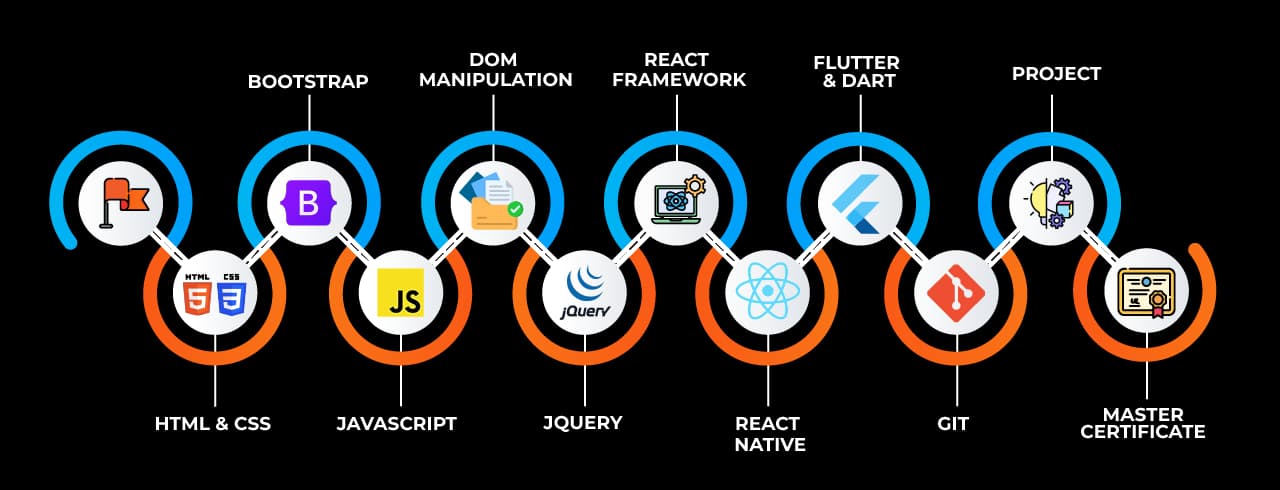
Master In Mobile App Development Course
OneCourseMultipleRoles
Empower your career with in-demand data skills and open doors to top-tier opportunities.
Skills & Tools You'll Learn -
 jQuery A lightweight JavaScript library that simplifies DOM manipulation, event handling, and animations.
 HTML and CSSStructure and style web pages using HTML for content and CSS for design.
 Bootstrap A front-end framework for building responsive, mobile-first websites.
 JavaScript A scripting language for adding interactivity and dynamic behavior to web pages.
 Basic Syntax and FundamentalsCore JavaScript concepts including keywords, operators, and expressions.
 Variables and Data TypesDeclaring and using variables with different data types in JavaScript.
 Control FlowUsing conditional statements and loops to control program execution.
 Arrays Storing, accessing, and manipulating collections of data in JavaScript.
 Spread and Rest OperatorsExpanding and collecting elements efficiently in JavaScript.
 DOM ManipulationInteracting with and modifying HTML elements dynamically using JavaScript.
 React FrameworkA JavaScript library for building fast and scalable user interfaces.
 JSX SyntaxA syntax extension for JavaScript that allows writing HTML-like code in React.
 Components Reusable building blocks for UI development in React.
State and Lifecycle MethodsManaging component state and handling lifecycle events in React.
Components Reusable building blocks for UI development in React.
State and Lifecycle MethodsManaging component state and handling lifecycle events in React. React RouterA library for handling navigation and routing in React applications.
 React HooksFunctions like useState and useEffect for managing state and side effects in React.
 Context APIA React feature for managing global state without prop drilling.
 Networking and APIsFetching and handling data from external sources using APIs.
 Navigation in FlutterManaging screen transitions and user navigation in Flutter apps.
 React NativeA framework for building cross-platform mobile applications using React.
 Flutter & DartA UI toolkit (Flutter) and programming language (Dart) for building mobile applications.
 Git A version control system for tracking code changes and collaboration.
Why Choose SevenMentor Mobile App Development
Empowering Careers with Industry-Ready Skills.

Specialized Pocket Friendly Programs as per your requirements

Live Projects With Hands-on Experience

Corporate Soft-skills & Personality Building Sessions

Digital Online, Classroom, Hybrid Batches

Interview Calls Assistance & Mock Sessions

1:1 Mentorship when required

Industry Experienced Trainers

Class Recordings for Missed Classes

1 Year FREE Repeat Option

Bonus Resources
Specialized Pocket Friendly Programs as per your requirements
Live Projects With Hands-on Experience
Corporate Soft-skills & Personality Building Sessions
Digital Online, Classroom, Hybrid Batches
Interview Calls Assistance & Mock Sessions
1:1 Mentorship when required
Industry Experienced Trainers
Class Recordings for Missed Classes
1 Year FREE Repeat Option
Bonus Resources

Fastest 1:1 doubt support

Flexible EMI Plans

Adaptive LMS

Free Wifi Facilities

Flexible Scheduling

Ongoing Career Support

Placement Drives

GitHub Project Implementations

Real World Topics

5/5 rating for 99% doubt Solutions

Be Different With Master Certificate

Latest Market Technology & Practical Training

Resume Building Session & Job Portals Training

Enhanced Capstone Projects for learning

Stand Out with an impressive Certificate

Weekday and Weekend Batches

Workshops & Seminars with Industry Experts

Unlimited Interview Calls

AWS Cloud Project Deployments

Live Quizzes

Resolve doubts any time through chat, voice notes, calling or meeting with instructors.
Curriculum For Mobile App Development
BATCH SCHEDULE
Mobile App Development Course
Find Your Perfect Training Session
Oct 18 - Oct 24
1 sessionOct 25 - Oct 31
2 sessionsNov 1 - Nov 7
1 sessionLearning Comes Alive Through Hands-On PROJECTS!
Comprehensive Training Programs Designed to Elevate Your Career

ShopEase (E-commerce Mobile App)
ConnectMe (Social Media Mobile App)

FoodHub (Food Delivery Mobile App)

FitTracker (Fitness Tracking Mobile App)

NewsBuzz (News Aggregator Mobile App)
No active project selected.
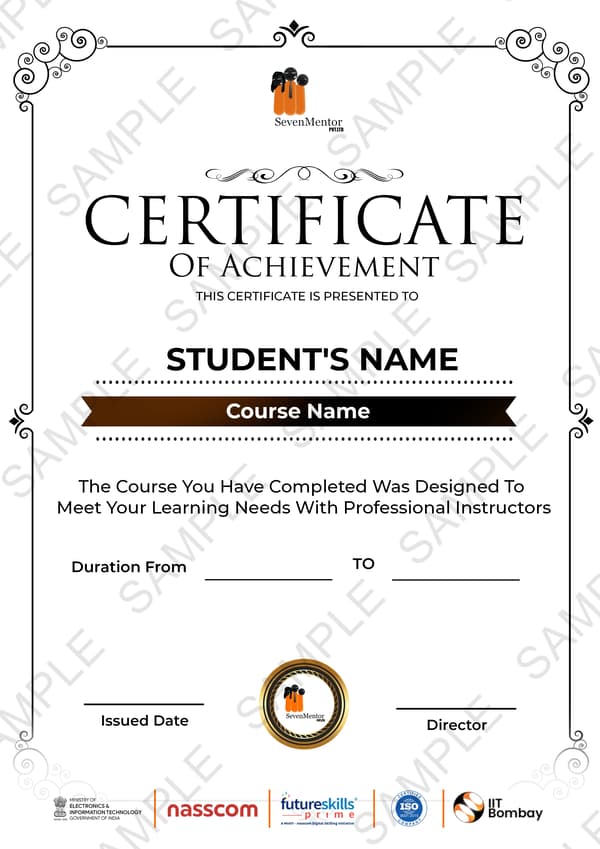
Transform Your Future with Elite Certification
Add Our Training Certificate In Your LinkedIn Profile
Our industry-relevant certification equips you with essential skills required to succeed in a highly dynamic job market.
Join us and be part of over 50,000 successful certified graduates.


KEY Features that Makes Us Better and Best FIT For You
Expert Trainers
Industry professionals with extensive experience to guide your learning journey.
Comprehensive Curriculum
In-depth courses designed to meet current industry standards and trends.
Hands-on Training
Real-world projects and practical sessions to enhance learning outcomes.
Flexible Schedules
Options for weekday, weekend, and online batches to suit your convenience.
Industry-Recognized Certifications
Globally accepted credentials to boost your career prospects.
State-of-the-Art Infrastructure
Modern facilities and tools for an engaging learning experience.
100% Placement Assistance
Dedicated support to help you secure your dream job.
Affordable Fees
Quality training at competitive prices with flexible payment options.
Lifetime Access to Learning Materials
Revisit course content anytime for continuous learning.
Personalized Attention
Small batch sizes for individualized mentoring and guidance.
Diverse Course Offerings
A wide range of programs in IT, business, design, and more.
Course Content
Frequently Asked Questions
Everything you need to know about our revolutionary job platform
Which is the best platform for developing mobile apps?
What language is better for app development?
Is mobile app development a full-stack process?
What steps should I take to begin my app development career?
What is the ideal degree for developing mobile apps?
Can I design an app without any prior experience?
Are there a lot of jobs for mobile developers?
Is it possible to make a free app paid?
Which is the best course for app development?
Is there need for mobile app developers?
Will artificial intelligence (AI) replace app developers?
What does it mean to develop a mobile application?
Is there a link between mobile app development and software development?
Is taking a mobile app development course worthwhile?
Is it worthwhile to hire a mobile app development agency?
Invest In Your Future With Skills That Matter.
Investing in the right skills at the right place paves the way for long-term career success and growth. SevenMentor Institute equips you with industry-relevant expertise, ensuring you stay ahead in an evolving job market.
Career Support:
Beyond technical training, we provide comprehensive career assistance, including resume building, interview coaching, and job placement support.
Recognized Certification:
Earn globally recognized certifications that validate your expertise and enhance your employability.
Company Tie-Ups:
We collaborate with leading corporations, startups, and multinational companies to provide our students with exclusive job opportunities, internships, and industry exposure.
Take the first step to fast-track your future!