Cloud Native Kubernetes Engineer Course

feature-iconBridge the Gap Between Development & Operations with Hands-On Training

feature-icon Learn To Master DevOps Tools and Automation for Seamless IT Operations

feature-iconUnlock High-Paying DevOps Roles with Industry-Focused Course at SevenMentor

020 71177392

Start Today!

CONSULT WITH OUR ADVISORS

  • Course & Curriculum Details
  • Flexible Learning Options
  • Affordable Learning
  • Enrollment Process
  • Career Guidance
  • Internship Opportunities
  • General Communication
  • Certification Benefits

Request Call Back

Loading...

Learning Curve for Cloud Native Kubernetes Engineer
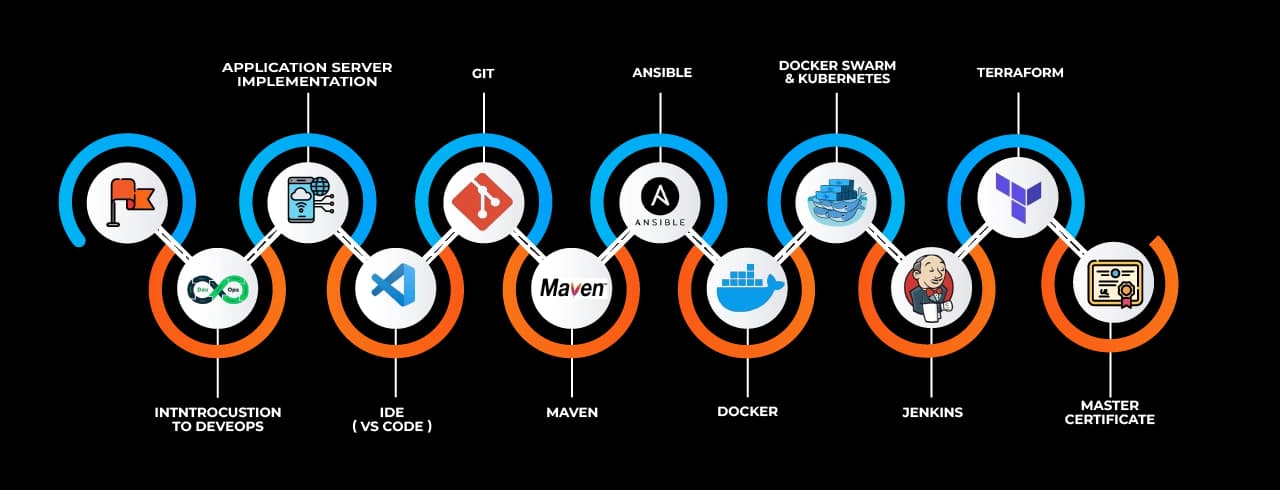
Learning curve for Cloud Native Kubernetes Engineer

Master In Cloud Native Kubernetes Engineer Course

OneCourseMultipleRoles

Empower your career with in-demand data skills and open doors to top-tier opportunities.

DevOps Architect
Release Manager
DevOps Engineer
Security Engineer
Software Developer
Automation engineering
Software Testing
DevOps specialist
DevSecOps Engineer
Integration Specialist
Systems engineering
Automation Expert
Quality Assurance
Reliability engineering

Skills & Tools You'll Learn -

DevOps  iconDevOps A culture and practice that integrates software development and IT operations for faster and more reliable releases.
CI/CD iconCI/CDA methodology for automating code integration, testing, and deployment to improve software delivery speed.
Continuous Integration iconContinuous IntegrationThe process of automatically integrating code changes into a shared repository multiple times a day.
Continuous Delivery/Deployment iconContinuous Delivery/DeploymentAutomating software releases to ensure reliable updates with minimal manual intervention.
Git iconGit A distributed version control system used for tracking code changes and collaboration.
Jenkins  iconJenkins An open-source automation tool for implementing CI/CD pipelines.
Maven  iconMaven A build automation tool primarily used for Java projects, managing dependencies and builds.
Ant  iconAnt A Java-based build tool for automating software compilation, testing, and deployment.
Ansible  iconAnsible A configuration management tool for automating IT infrastructure and application deployment.
Terraform  iconTerraform An IaC tool used to define and provision cloud infrastructure using declarative configuration files.
Container  iconContainer A lightweight, portable, and consistent runtime environment for applications.
Docker  iconDocker A containerization platform that enables developers to package, distribute, and run applications in isolated environments.
Podman  iconPodman A daemonless container engine that provides a secure alternative to Docker.
Kubernetes  iconKubernetes A container orchestration system for automating deployment, scaling, and management of containerized applications.
Docker Swarm iconDocker SwarmA native clustering tool for managing and orchestrating Docker containers.
SDLC  iconSDLC The Software Development Life Cycle, outlining stages from planning to maintenance in software development.
Tomcat  iconTomcat An open-source Java application server used for deploying Java-based web applications.
Apache HTTPD iconApache HTTPDA widely used open-source web server for hosting and serving web applications.
VSCode  iconVSCode A lightweight yet powerful code editor with support for debugging, Git, and extensions.
IaC (Infrastructure as Code) iconIaC (Infrastructure as Code)Managing and provisioning infrastructure using machine-readable scripts instead of manual processes.

Why Choose SevenMentor Cloud Native Kubernetes Engineer

Empowering Careers with Industry-Ready Skills.

Specialized Pocket Friendly Programs as per your requirements

Specialized Pocket Friendly Programs as per your requirements

Live Projects With Hands-on Experience

Live Projects With Hands-on Experience

Corporate Soft-skills & Personality Building Sessions

Corporate Soft-skills & Personality Building Sessions

Digital Online, Classroom, Hybrid Batches

Digital Online, Classroom, Hybrid Batches

Interview Calls Assistance & Mock Sessions

Interview Calls Assistance & Mock Sessions

1:1 Mentorship when required

1:1 Mentorship when required

Industry Experienced Trainers

Industry Experienced Trainers

Class Recordings for Missed Classes

Class Recordings for Missed Classes

1 Year FREE Repeat Option

1 Year FREE Repeat Option

Bonus Resources

Bonus Resources

Curriculum For Cloud Native Kubernetes Engineer

BATCH SCHEDULE

Cloud Native Kubernetes Engineer Course

Find Your Perfect Training Session

Sep 6 - Sep 12

1 session
12
Sat
Classroom/ Online
Weekend Batch

Sep 13 - Sep 19

2 sessions
13
Sun
Classroom/ Online
Weekend Batch
14
Mon
Classroom/ Online
Regular Batch

Sep 20 - Sep 26

1 session
21
Mon
Classroom/ Online
Regular Batch

Learning Comes Alive Through Hands-On PROJECTS!

Comprehensive Training Programs Designed to Elevate Your Career

Simple DevOps Project for CI/CD using Jenkins

Simple DevOps Project for CI/CD using Jenkins

CI/CD Pipeline using Git, Jenkins, Ansible, and Docker Swarm/Kubernetes

CI/CD Pipeline using Git, Jenkins, Ansible, and Docker Swarm/Kubernetes

AWS Infrastructure Management using Terraform
AWS Infrastructure Management using Terraform

Continuous Integration and Continuous Deployment without Downtime

Continuous Integration and Continuous Deployment without Downtime

Terraform and Ansible Smart Combination for Managing Infrastructure & Software Configuration

Terraform and Ansible Smart Combination for Managing Infrastructure & Software Configuration

No active project selected.

Transform Your Future with Elite Certification

Add Our Training Certificate In Your LinkedIn ProfileLinkedIn

Our industry-relevant certification equips you with essential skills required to succeed in a highly dynamic job market.

Join us and be part of over 50,000 successful certified graduates.

Student 1
Student 2
Student 3
Student 4
Student 5
Join 15,258 others learning today
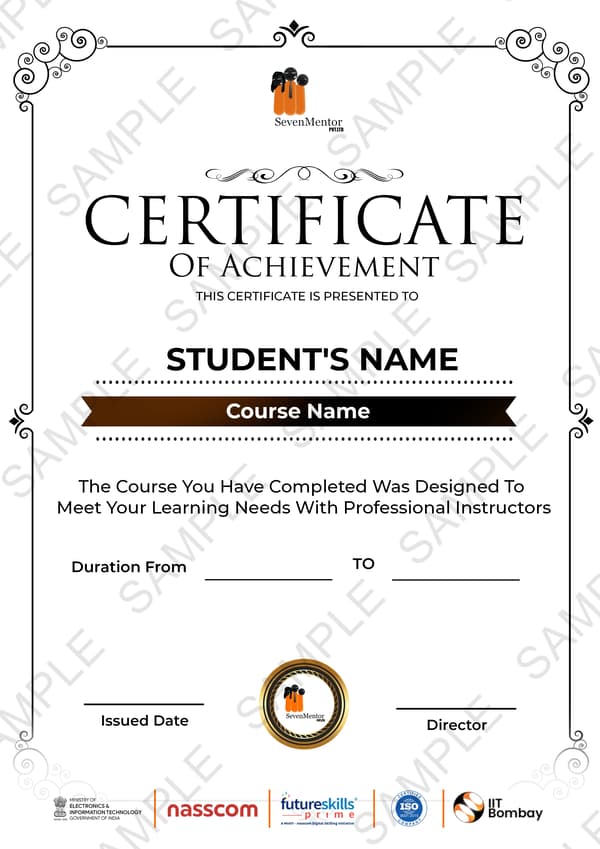
Certificate Preview

KEY Features that Makes Us Better and Best FIT For You

Expert Trainers

Industry professionals with extensive experience to guide your learning journey.

Comprehensive Curriculum

In-depth courses designed to meet current industry standards and trends.

Hands-on Training

Real-world projects and practical sessions to enhance learning outcomes.

Flexible Schedules

Options for weekday, weekend, and online batches to suit your convenience.

Industry-Recognized Certifications

Globally accepted credentials to boost your career prospects.

State-of-the-Art Infrastructure

Modern facilities and tools for an engaging learning experience.

100% Placement Assistance

Dedicated support to help you secure your dream job.

Affordable Fees

Quality training at competitive prices with flexible payment options.

Lifetime Access to Learning Materials

Revisit course content anytime for continuous learning.

Personalized Attention

Small batch sizes for individualized mentoring and guidance.

Diverse Course Offerings

A wide range of programs in IT, business, design, and more.

Course Content

Why Are Kubernetes DevOps Skills Mandatory Right Now?

A production cluster crash-loops at 2 AM because someone pushed an unhedged memory limit in a deployment manifest. The deployment rollback fails and ingress drops incoming TCP traffic, as well as the monitoring dashboard goes bright red. That is what a real Monday morning looks like for container operators in Pune IT hubs right now.

Companies across Hinjewadi and Kharadi are retiring legacy virtual machine stacks fast. Job postings for container orchestration specialists have jumped 42% over the past year, that's based on hiring data pulled from more than 500 tech firms. Sysadmins still stuck on static IP blocks and manual bash scripts are hitting a wall in interviews lately, pipelines going cold fast.

Learning container orchestration isn't about memorizing syntax from static slides. It requires hands-on experience on live cloud control planes. You need to know how Kubernetes handles node pressure along with secret management and automated rollouts when things break under high traffic load.

At SevenMentor, our Kubernetes DevOps Training program is built around live-console labs mapped to actual cluster incidents. Freshers and working professionals learn to run kubectl commands, deploy Helm charts, plus manage production clusters under real load.

Entry-level packages for trained container engineers in Pune average ₹9.2 LPA, with experienced engineers commanding upwards of ₹24 LPA. The current batch schedule fills fast, and the next weekday intake starts in under three weeks.

Why Does This Kubernetes Course Matter Right Now?

AWS EKS, Azure AKS, and Google GKE are now standard infrastructure across Pune's major tech corridors in Hadapsar and Pimpri Chinchwad, as well as Shivaji Nagar. Product firms no longer hire developers just to write application code. They want engineers who understand multi-region cluster management, ingress routing, as well as zero-downtime deployments.

Minikube on a local laptop, that's usually where most online tutorials stop, a single-node cluster and nothing past it. Fine for a demo. Fall apart the moment RBAC permissions start fighting with a CNI plugin in an actual staging environment though. A cluster might work locally, but it wont pass corporate security audits without automated policy engine rules in place.

Our program addresses this exact gap by teaching real enterprise workflows. You will configure service meshes using Istio along with manage GitOps pipelines with ArgoCD and enforce cluster policies using Kyverno.

Our trainers have spent years on call fixing production outages across enterprise infrastructure. They show you the messy side of cluster operations, like recovering from corrupted etcd state store databases or debugging broken persistent volumes.

Local hiring trends indicate that tech organizations actively look for engineers with practical troubleshooting skills. Having a theoretical understanding gets you past the resume screening, but live console skills get you through the technical rounds.

What Makes SevenMentor Different From Other Options?

Generic bootcamps love pre-recorded videos and clean slide presentations where every command works perfectly on the first try. That isnt how real engineering works. At SevenMentor, we host live-console cluster environments on dedicated hardware in our Pune facility.

Every enrolled student receives isolated namespace access, private container registries, plus dedicated CI/CD pipeline triggers. We deliberately introduce network latency, broken pod configurations, plus expired TLS certs during lab sessions. You learn root-cause analysis using Jaeger distributed tracing and Loki log aggregation tools while the clock is ticking.

We keep batch sizes strictly capped at 18 students so trainers can give direct technical assistance during debugging sessions. If you get stuck configuring persistent volume claims or stateful sets, a dedicated instructor works through your terminal output with you.

Our status as a recognized 100% job placement institute in Pune is grounded in direct employer access. Our dedicated placement cell runs technical mock interviews and forwards portfolios straight to engineering managers.

Recruiter feedback from the 500+ hiring partner network feeds straight back into the syllabus, updates happening constantly rather than once a year. Local companies started asking for stronger observability skills specifically, so Prometheus metrics scraping and Grafana alert configuration went straight into the baseline modules, no waiting for the next syllabus cycle.

What Does the Curriculum Actually Cover Day to Day?

The training follows a progressive blueprint that starts with basic containerization before moving into complex distributed control planes. You dont spend weeks listening to theory before touching a terminal. Hands-on terminal practice starts on day two.

The curriculum covers container builds, network overlays, state storage, along with release automation. Every module pairs specific conceptual foundations with raw command-line troubleshooting.


Completing all lab assignments culminates in a capstone project. You build and secure, as well as monitor a multi-service production architecture from scratch. That capstone becomes the actual proof point in front of a hiring manager, not a line on a resume nobody can verify.

What Does the Pay Actually Look Like Here?

Pay for this kind of work swings a lot, mostly based on actual cluster hours logged and how well someone handles a real troubleshooting situation under pressure. ₹6.5 to ₹9.5 lakh a year is the realistic starting band for freshers stepping into entry-level DevOps work.

Get comfortable with declarative multi-cluster automation somewhere around the two-to-four-year mark, and ₹16 LPA becomes a pretty normal number to cross. Adding security specializations like runtime threat detection with Falco or admission control policies pushes compensation higher still.

  • Associate DevOps Engineer (0–2 years): ₹6.5 – ₹9.5 LPA. Basic kubectl operations, pod updates, and simple CI pipeline fixes make up most of the work at this stage.
  • Kubernetes Systems Engineer (2–5 years): ₹11.0 – ₹17.5 LPA. deployments for production Helm as well as ArgoCD sync and then the cluster monitoring tools make up most of the day-to-day here.
  • Senior Cloud Native Architect (5+ years): Salary of almost ₹18.0 to  ₹28.0+ Lakhs per annum. Multi-region hybrid cluster design, custom CRDs, and security compliance frameworks sit at this level.

Slapping a few container buzzwords on a LinkedIn profile doesn't move a paycheck on its own, recruiters test for the real thing fast, usually by handing you a broken YAML file mid-interview and watching what you do with it.

Passing official certifications like CKA or CKAD helps get your resume noticed, but landing high-paying offers comes down to explaining real operational incidents you solved in class.

How Do You Actually Lock In a Seat For This Batch?

18 students per cohort, that's the hard cap, kept deliberately low so lab sessions don't turn into a queue for the trainer's attention. Our upcoming weekday batch starting July 14th currently has 4 seats remaining. The upcoming weekend track starting July 21st has 5 open seats left.

Registering before June 30th locks in an early-bird fee reduction of ₹15,000 on the full tuition amount. Flexible fee payment options and zero-cost EMI plans are available for working professionals and recent graduates.

Call our main Pune head office line at 020-71173071 or email support@sevenmentor.com to lock in your seat along with schedule a live demo session and request detailed syllabus documentation. For learners located in Mumbai, contact our direct city line at 022-48904395.

If you are looking to upskill your enterprise team, SevenMentor also runs a dedicated Corporate Training program focused on team upskilling in IT infrastructure and cloud tools.

Relevant Courses and Resources

  • AWS Course — for going deeper on a single cloud provider once multi-cluster fundamentals feel solid.
  • Data Science Course — a fit for anyone whose infrastructure work is starting to touch data pipelines.
  • Data Analytics Course — useful for engineers who end up owning reporting dashboards alongside cluster telemetry.
  • Python Course — strengthens the scripting side of automation work covered throughout this program.
  • Ethical Hacking Course — pairs well with the cluster security modules for anyone leaning toward DevSecOps.
  • Full Stack Developer Course — for developers who want application-level context before going deep on infrastructure.

FAQs

Is prior Linux experience actually necessary before starting? 

Depends where you're coming from, honestly. Basic terminal commands, a bash script or two under your belt, that's enough to move through the material without much friction. Zero command-line experience just means a few extra hours in week one getting comfortable with the terminal, the introductory module covers Linux fundamentals specifically so nobody's left behind.

What's the plan if a live session gets missed? 

Recordings go up on the student portal within about four hours, high-definition, and that access sticks around for life, along with updated lab guides and personal cluster namespace access. A weekend catch-up session covers what got missed too, or just grab a trainer during office hours to walk through it directly.

Does course tuition cover the official CKA or CKAD exam fee? 

The course tuition covers all internal training, personal cluster lab access, as well as study materials, and even SevenMentor certification. The official Linux Foundation exam vouchers (for CKA or CKAD) are sold separately by the Linux Foundation directly. However, along with it we provide dedicated exam prep modules, plus timed practice tests and voucher discount guidance to all enrolled students.

How does placement assistance actually work for fresh graduates? 

Direct introductions to hiring partners, that's what placement support actually means here, not a resume disappearing into some automated portal. Resume reviews happen. So do technical mock interviews. Direct referrals go out to the 500+ company network spanning Pune and Mumbai too. Whether the offer actually lands still comes down to how well someone talks through their own hands-on project work in the room.

Can I attend the course fully online from another city? 

Yes, fully interactive online batches run simultaneously with our in-person Pune classes. Online learners connect to the exact same cloud lab clusters and bare-metal environments used in our physical classrooms. Alumni from Mumbai, Bangalore, together with Hyderabad and international locations have completed the training through our remote portal.

What kind of computer hardware do I need for the lab assignments?

Honestly there is nothing fancy that you need. An old i5 or a basic Ryzen chip with 8 GB RAM and a decent internet connection will definitely get the job done for you in this course. All the heavy stuff such as multi-node clusters and everything will actually run on SevenMentor's cloud infrastructure in the background for you to test. And thus nobody needs a gaming laptop or some local virtualization setup eating up their hard drive in this course so don't worry about hardware. 

How frequently does the Kubernetes curriculum actually get updated? 

We review and update the course curriculum every three months based on technical feedback from hiring partners and alumni working in production roles. Tools like Argo Rollouts along with Kyverno and Cluster API were added during recent updates after local engineering teams listed them as core requirements during interview screens.

Frequently Asked Questions

Everything you need to know about our revolutionary job platform

1

What topics are covered in the DevOps Course?

Ans:
The course includes cloud architecture, virtualization, networking, security, DevOps integration, serverless computing, cloud automation, and hands-on training with AWS, Azure, and GCP.
2

Why choose SevenMentor Institute for DevOps training?

Ans:
SevenMentor offers industry-focused training with expert instructors, real-world projects, hands-on labs, flexible batches, and 100% placement assistance for career growth.
3

What tools and technologies will I learn in the DevOps Classes?

Ans:
You'll work with AWS, Microsoft Azure, Google Cloud, Terraform, Kubernetes, Docker, Jenkins, CI/CD pipelines, Ansible, and cloud security tools.
4

Does the DevOps Certification include real-world projects?

Ans:
Yes, students gain hands-on experience through real-world cloud deployment projects, infrastructure automation, security management, and performance optimization.
5

How long is the DevOps Course ?

Ans:
The duration varies between 2 to 6 months, with weekday and weekend batches available for both beginners and professionals.
6

What career opportunities are available after completing the DevOps Classes?

Ans:
After completion, you can explore roles like Cloud Engineer, Solutions Architect, DevOps Engineer, Site Reliability Engineer (SRE), and Cloud Security Specialist.
7

Is this DevOps Course suitable for beginners?

Ans:
Yes, the course is designed for both freshers and IT professionals, starting from the basics and progressing to advanced cloud concepts.
8

How does DevOps Certification add value to my career?

Ans:
A certification validates your cloud expertise, making you a strong candidate for high-paying IT roles in cloud infrastructure and services.
9

Can I take DevOps Classes online?

Ans:
Yes, SevenMentor offers both classroom and online training, providing flexibility for learners across different locations.
10

What makes SevenMentor the best institute for DevOps training?

Ans:
SevenMentor stands out due to expert trainers, hands-on training, industry-aligned syllabus, real-world projects, and a strong placement network.
11

Will I receive study materials during the DevOps Certification program?

Ans:
Yes, students receive comprehensive study materials, including notes, assignments, practical exercises, and recorded sessions.
12

Does the DevOps Course cover advanced topics like DevOps and automation?

Ans:
Absolutely! The course includes Infrastructure as Code (IaC), CI/CD pipelines, Kubernetes, cloud security, and cloud automation techniques.
13

Can I take DevOps Classes online?

Ans:
Yes, SevenMentor offers both classroom and online training, providing flexibility for learners across different locations.