FinOps and Cloud Cost Engineering Course in Nagpur

feature-iconBridge the Gap Between Development & Operations with Hands-On Training

feature-icon Learn To Master DevOps Tools and Automation for Seamless IT Operations

feature-iconUnlock High-Paying DevOps Roles with Industry-Focused Course at SevenMentor

07507414653

Start Today!

CONSULT WITH OUR ADVISORS

  • Course & Curriculum Details
  • Flexible Learning Options
  • Affordable Learning
  • Enrollment Process
  • Career Guidance
  • Internship Opportunities
  • General Communication
  • Certification Benefits

Request Call Back

Loading...

Learning Curve for FinOps & Cloud Cost Engineering in Nagpur
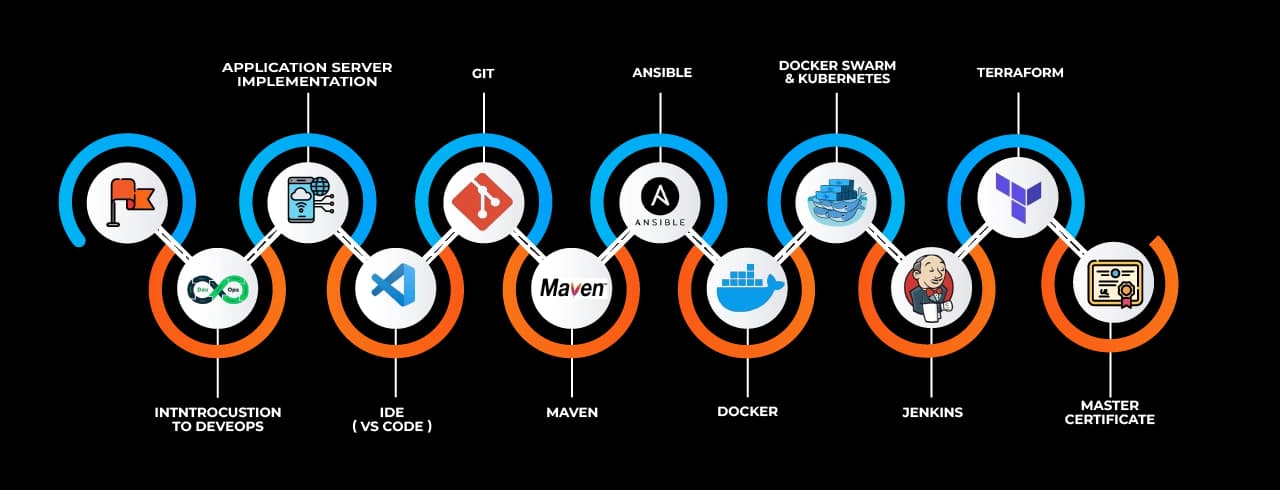
Learning curve for FinOps & Cloud Cost Engineering in Nagpur

Master In FinOps & Cloud Cost Engineering in Nagpur Course

OneCourseMultipleRoles

Empower your career with in-demand data skills and open doors to top-tier opportunities.

DevOps Architect
Release Manager
DevOps Engineer
Security Engineer
Software Developer
Automation engineering
Software Testing
DevOps specialist
DevSecOps Engineer
Integration Specialist
Systems engineering
Automation Expert
Quality Assurance
Reliability engineering

Skills & Tools You'll Learn -

DevOps  iconDevOps A culture and practice that integrates software development and IT operations for faster and more reliable releases.
CI/CD iconCI/CDA methodology for automating code integration, testing, and deployment to improve software delivery speed.
Continuous Integration iconContinuous IntegrationThe process of automatically integrating code changes into a shared repository multiple times a day.
Continuous Delivery/Deployment iconContinuous Delivery/DeploymentAutomating software releases to ensure reliable updates with minimal manual intervention.
Git iconGit A distributed version control system used for tracking code changes and collaboration.
Jenkins  iconJenkins An open-source automation tool for implementing CI/CD pipelines.
Maven  iconMaven A build automation tool primarily used for Java projects, managing dependencies and builds.
Ant  iconAnt A Java-based build tool for automating software compilation, testing, and deployment.
Ansible  iconAnsible A configuration management tool for automating IT infrastructure and application deployment.
Terraform  iconTerraform An IaC tool used to define and provision cloud infrastructure using declarative configuration files.
Container  iconContainer A lightweight, portable, and consistent runtime environment for applications.
Docker  iconDocker A containerization platform that enables developers to package, distribute, and run applications in isolated environments.
Podman  iconPodman A daemonless container engine that provides a secure alternative to Docker.
Kubernetes  iconKubernetes A container orchestration system for automating deployment, scaling, and management of containerized applications.
Docker Swarm iconDocker SwarmA native clustering tool for managing and orchestrating Docker containers.
SDLC  iconSDLC The Software Development Life Cycle, outlining stages from planning to maintenance in software development.
Tomcat  iconTomcat An open-source Java application server used for deploying Java-based web applications.
Apache HTTPD iconApache HTTPDA widely used open-source web server for hosting and serving web applications.
VSCode  iconVSCode A lightweight yet powerful code editor with support for debugging, Git, and extensions.
IaC (Infrastructure as Code) iconIaC (Infrastructure as Code)Managing and provisioning infrastructure using machine-readable scripts instead of manual processes.

Why Choose SevenMentor FinOps & Cloud Cost Engineering in Nagpur

Empowering Careers with Industry-Ready Skills.

Specialized Pocket Friendly Programs as per your requirements

Specialized Pocket Friendly Programs as per your requirements

Live Projects With Hands-on Experience

Live Projects With Hands-on Experience

Corporate Soft-skills & Personality Building Sessions

Corporate Soft-skills & Personality Building Sessions

Digital Online, Classroom, Hybrid Batches

Digital Online, Classroom, Hybrid Batches

Interview Calls Assistance & Mock Sessions

Interview Calls Assistance & Mock Sessions

1:1 Mentorship when required

1:1 Mentorship when required

Industry Experienced Trainers

Industry Experienced Trainers

Class Recordings for Missed Classes

Class Recordings for Missed Classes

1 Year FREE Repeat Option

1 Year FREE Repeat Option

Bonus Resources

Bonus Resources

Curriculum For FinOps & Cloud Cost Engineering in Nagpur

BATCH SCHEDULE

FinOps & Cloud Cost Engineering in Nagpur Course

Find Your Perfect Training Session

Sep 6 - Sep 12

1 session
12
Sat
Classroom/ Online
Weekend Batch

Sep 13 - Sep 19

2 sessions
13
Sun
Classroom/ Online
Weekend Batch
14
Mon
Classroom/ Online
Regular Batch

Sep 20 - Sep 26

1 session
21
Mon
Classroom/ Online
Regular Batch

Learning Comes Alive Through Hands-On PROJECTS!

Comprehensive Training Programs Designed to Elevate Your Career

Simple DevOps Project for CI/CD using Jenkins

Simple DevOps Project for CI/CD using Jenkins

CI/CD Pipeline using Git, Jenkins, Ansible, and Docker Swarm/Kubernetes

CI/CD Pipeline using Git, Jenkins, Ansible, and Docker Swarm/Kubernetes

AWS Infrastructure Management using Terraform
AWS Infrastructure Management using Terraform

Continuous Integration and Continuous Deployment without Downtime

Continuous Integration and Continuous Deployment without Downtime

Terraform and Ansible Smart Combination for Managing Infrastructure & Software Configuration

Terraform and Ansible Smart Combination for Managing Infrastructure & Software Configuration

No active project selected.

Transform Your Future with Elite Certification

Add Our Training Certificate In Your LinkedIn ProfileLinkedIn

Our industry-relevant certification equips you with essential skills required to succeed in a highly dynamic job market.

Join us and be part of over 50,000 successful certified graduates.

Student 1
Student 2
Student 3
Student 4
Student 5
Join 15,258 others learning today
Certificate Preview

KEY Features that Makes Us Better and Best FIT For You

Expert Trainers

Industry professionals with extensive experience to guide your learning journey.

Comprehensive Curriculum

In-depth courses designed to meet current industry standards and trends.

Hands-on Training

Real-world projects and practical sessions to enhance learning outcomes.

Flexible Schedules

Options for weekday, weekend, and online batches to suit your convenience.

Industry-Recognized Certifications

Globally accepted credentials to boost your career prospects.

State-of-the-Art Infrastructure

Modern facilities and tools for an engaging learning experience.

100% Placement Assistance

Dedicated support to help you secure your dream job.

Affordable Fees

Quality training at competitive prices with flexible payment options.

Lifetime Access to Learning Materials

Revisit course content anytime for continuous learning.

Personalized Attention

Small batch sizes for individualized mentoring and guidance.

Diverse Course Offerings

A wide range of programs in IT, business, design, and more.

Course Content

Walk into a mid-sized IT firm on Wardha Road and ask what kept leadership awake last quarter. Half the time the answer isn’t revenue — it’s the AWS or Azure invoice. Nagpur’s IT scene has matured fast over the last four years; MIHAN’s IT park now hosts product startups, GCC-adjacent ops teams, and back-office engineering hubs for larger Pune and Mumbai firms. Those teams started small, spun up cloud accounts freely, and now carry monthly bills that nobody can confidently explain line by line.

You’ve probably seen the same pattern: a debit-card-linked account that grew into a sprawl of dev, staging, and prod environments across multiple regions. The trade-off is clear — rapid experimentation fuels product speed, but the lack of ownership makes every invoice a mystery. That’s exactly where FinOps engineering earns its seat at the table. It isn’t a finance function dressed in tech jargon; it’s the practice of giving engineering teams visibility, guardrails, and accountability so they spend cloud money like their own without throttling the experimentation that makes the product work.

MIHAN-based SaaS firms, BFSI back-office operations, and newer fintech entrants are quietly building FinOps practices because board reviews now ask harder questions about cloud run-rate than ever before. If you’re an engineer who can already read a bill and negotiate a reserved-instance commitment, Nagpur will pay you for that. If you’re a finance analyst who can sit inside a sprint and reason about architecture trade-offs, ditto. The FinOps & cloud cost engineering course in Nagpur exists for that bridge role — the one neither traditional IT training nor a finance certification fully covers.

Salary Of FinOps Engineers across Nagpur and India in 2026:

The FinOps space is still fairly new compared with established IT roles like cloud administration or software development. Because companies are still figuring out how these roles should fit into their teams, salaries can vary quite a bit depending on the person’s cloud experience, responsibilities, and the size of the environment they manage. 

The figures below give a practical idea of where Nagpur currently stands, especially across product companies and GCC support teams that are building stronger cloud operations. 

experience level 

typical role in nagpur

indicative annual ctc (inr)

what they actually do

0–2 years

cloud cost analyst / junior finops associate

4.5L – 7L

tagging audits, monthly variance reports, rightsizing tickets

3–5 years

finops engineer / cloud cost engineer

8L – 14L

reserved-instance strategy, showback/chargeback models, anomaly detection

6–10 years

lead cloud cost engineer / finops practice lead

16L – 26L

multi-account governance, finops framework rollout, exec reporting, vendor negotiation


Notice the middle band jumps harder than the early band. Once an engineer can connect a utilization graph to a commitment discount strategy and defend the trade-off to a CFO, they’ve crossed from reporting into actual cloud cost engineering — a capability still scarce outside Bengaluru and Hyderabad. Nagpur firms are willing to pay Pune-comparable packages because remote-friendly policy now means the engineer doesn’t have to relocate.

FinOps & Cloud Cost Engineering  Skills & Curriculum At SevenMentor

The FinOps cloud cost engineering curriculum at SevenMentor is structured so each module finishes with a deliverable you can show a hiring manager — not just a slide deck. Below is the module breakdown.


cloud billing foundations

map every line item in aws, azure, gcp bills to a service and a team owner

aws cost explorer, azure cost management, gcp billing reports

tagging, allocation & chargeback

design a tagging taxonomy that survives contact with engineering teams

tag policies, aws organizations, custom iac modules

reserved instances, savings plans & commit-based discounting

build a 12-month commitment strategy across accounts

aws savings plans, azure ri, gcp cuds

rightsizing & workload optimization

use live utilization data to recommend instance and storage changes

compute optimizer, trusted advisor, third-party tools

observability for cost

wire cost signals into the same dashboards that monitor performance

cloudwatch, grafana, prometheus, custom metrics

finops framework & culture

roll out a phased FinOps practice with crawl-walk-run maturity

finops foundation framework, kpis, stakeholder playbooks

real-time anomaly detection

set budgets, alerts, and automated remediation hooks

lambda, eventbridge, alerting pipelines

capstone: multi-account cost engineering project

audit a simulated 3-account estate and present savings plan to a mock cfo

all of the above


The capstone is the part hiring managers ask about. Walking into an interview with a documented 20–30 % savings recommendation on a multi-account setup is the difference between being interviewed and being hired. The trade-off: you’ll need to justify every recommendation to a skeptical engineering lead who fears throttling — that negotiation skill is baked into the project.

What Makes This Program Different in Nagpur

  • Live-console sandbox environments — every module runs on real AWS/Azure accounts with real billing data, not static slide decks.
  • Trainers who’ve owned a cloud budget — not certified instructors who’ve only read documentation.
  • Small batch sizes — cost-optimization trade-offs get discussed, not skipped.
  • Weekday-evening and weekend batches built for engineers and finance analysts already working full-time.
  • City-specific case studies tied to Nagpur’s MIHAN product firms and BFSI back-offices, not borrowed from a Bangalore template.
  • Curriculum inputs sourced from students — SevenMentor revises modules when a cohort surfaces a new optimization pattern or a fresh commitment model from a vendor.
  • The program also covers the cultural side — how to push a savings recommendation past a stubborn engineering lead who doesn’t want their service throttled. That’s the part most training chains skip because it’s harder to teach than a tool.

Demand Drivers & Real-World Application in Nagpur

  1. Three forces are pushing cloud cost engineering training in Nagpur from “nice to have” to “hiring requirement” inside the next twelve months.
  2. First, MIHAN’s product companies have outgrown their founder-era cloud setups. What started as a single AWS account with a debit card attached is now a sprawl of dev, staging, and prod environments across multiple regions. Someone needs to own that consolidation.
  3. Second, GCC and shared-services teams operating in Nagpur for larger parent companies are being asked to defend their internal chargeback numbers quarterly. That’s pure FinOps work, and it’s being routed to local hires rather than the parent company’s central cloud team.
  4. Third, generative AI workloads have changed the cost conversation entirely. A team that fine-tunes models overnight can blow a quarterly budget before the morning stand-up. FinOps engineers who understand GPU commitment strategies and inference-cost modeling are suddenly very sought-after.

The trade-off worth knowing: aggressive cost optimization can throttle legitimate innovation if guardrails are set too tight. The role exists precisely because that balance is hard — and worth paying for.

Enroll in the Next FinOps Batch in Nagpur

Seats for the upcoming Nagpur cohort are filling faster than previous batches because three MIHAN-based product firms have flagged it to their engineering leads.

Explore Related Programs

Looking to broaden your cloud or data skill set alongside FinOps? These programs pair well with cost engineering work:

Cloud Computing Course at SevenMentor — the broader cloud foundation this FinOps track builds on. AWS Certification Course — strong pairing for engineers who’ll negotiate reserved-instance strategies daily. Data Engineering Course — useful for wiring cost signals into observability pipelines.

FAQs

What is FinOps and is it only for finance people?

FinOps sits between cloud engineering, finance, and business teams, so you don't have to come from a pure finance background to work in it. Someone with AWS, Azure, infrastructure, or DevOps experience can move into FinOps as long as they are comfortable looking at cloud usage and figuring out where the money is going.

Do I need prior AWS or Azure experience before joining?

You don't need to be an advanced cloud engineer before starting the course, but knowing the basics of AWS or Azure will make several topics easier to follow. If you've worked with cloud services, virtual machines, storage, or basic billing concepts before, you'll have a much easier time connecting the technical side with the cost side.

Will FinOps engineering still be relevant after a few years?

Cloud bills aren't getting simpler, especially with companies running larger environments and adding AI workloads that can change spending very quickly. As cloud usage grows, businesses still need people who can look at that spending and work out what should be reduced, what should stay, and where cutting costs could create a performance problem.

Is FinOps a good career switch from a finance background?

It can yes make sense if you already work with budgets, cost reports, or financial planning and don't mind picking up the cloud side of things. You may need some time to understand AWS or Azure services, but your existing understanding of numbers and spending gives you a useful starting point for FinOps work. 

What’s the difference between a FinOps course and a Cloud course?

A cloud course is mainly about working with services such as compute, storage, networking, databases, and other parts of a cloud environment. A FinOps course takes a different angle by looking at what those services cost and how teams can control that spending without making the infrastructure harder to run.

Do you provide placement support after the FinOps course?

Yes, SevenMentor provides placement support as the training is spread over several weeks so there is enough time to work through the cloud cost topics and practical exercises without rushing through everything. Weekend batches along with weekday-evening options make it easier to attend if you already have a full-time job. 

Are the labs real cloud consoles or simulators?

The training uses live cloud-based sandbox environments so you can work through billing and cost scenarios instead of simply watching someone demonstrate them on slides. That gives you a chance to see how usage, resources, alerts, and cost changes behave when you're actually working through a cloud environment.

How long is the FinOps program and is there a weekend batch?

The FinOps program runs across several weeks and covers the topics in stages rather than trying to squeeze everything into a few sessions. Weekend and weekday-evening batches are available for working professionals who need to fit the training around their regular job.

Frequently Asked Questions

Everything you need to know about our revolutionary job platform

1

What topics are covered in the DevOps Course?

Ans:
The course includes cloud architecture, virtualization, networking, security, DevOps integration, serverless computing, cloud automation, and hands-on training with AWS, Azure, and GCP.
2

Why choose SevenMentor Institute for DevOps training?

Ans:
SevenMentor offers industry-focused training with expert instructors, real-world projects, hands-on labs, flexible batches, and 100% placement assistance for career growth.
3

What tools and technologies will I learn in the DevOps Classes?

Ans:
You'll work with AWS, Microsoft Azure, Google Cloud, Terraform, Kubernetes, Docker, Jenkins, CI/CD pipelines, Ansible, and cloud security tools.
4

Does the DevOps Certification include real-world projects?

Ans:
Yes, students gain hands-on experience through real-world cloud deployment projects, infrastructure automation, security management, and performance optimization.
5

How long is the DevOps Course ?

Ans:
The duration varies between 2 to 6 months, with weekday and weekend batches available for both beginners and professionals.
6

What career opportunities are available after completing the DevOps Classes?

Ans:
After completion, you can explore roles like Cloud Engineer, Solutions Architect, DevOps Engineer, Site Reliability Engineer (SRE), and Cloud Security Specialist.
7

Is this DevOps Course suitable for beginners?

Ans:
Yes, the course is designed for both freshers and IT professionals, starting from the basics and progressing to advanced cloud concepts.
8

How does DevOps Certification add value to my career?

Ans:
A certification validates your cloud expertise, making you a strong candidate for high-paying IT roles in cloud infrastructure and services.
9

Can I take DevOps Classes online?

Ans:
Yes, SevenMentor offers both classroom and online training, providing flexibility for learners across different locations.
10

What makes SevenMentor the best institute for DevOps training?

Ans:
SevenMentor stands out due to expert trainers, hands-on training, industry-aligned syllabus, real-world projects, and a strong placement network.
11

Will I receive study materials during the DevOps Certification program?

Ans:
Yes, students receive comprehensive study materials, including notes, assignments, practical exercises, and recorded sessions.
12

Does the DevOps Course cover advanced topics like DevOps and automation?

Ans:
Absolutely! The course includes Infrastructure as Code (IaC), CI/CD pipelines, Kubernetes, cloud security, and cloud automation techniques.
13

Can I take DevOps Classes online?

Ans:
Yes, SevenMentor offers both classroom and online training, providing flexibility for learners across different locations.