PL SQL Courses in Akola
feature-iconPL/SQL (Procedural Language/Structured Query Language) is a computer language that mixes SQL and procedural code.

feature-iconOracle created it.
feature-iconOracle Corporation created PL/SQL (Procedural Language for SQL) as a procedural extension for SQL and the Oracle relational database.

020-71171500

Start Today!

CONSULT WITH
OUR ADVISORS

  • Course & Curriculum Details
  • Flexible Learning Options
  • Affordable Learning
  • Enrollment Process
  • Career Guidance
  • Internship Opportunities
  • General Communication
  • Certification Benefits

Learning Curve for PL/SQL

Learning curve for PL/SQL

Master In PL/SQL Course

OneCourseMultipleRoles

Empower your career with in-demand data skills and open doors to top-tier opportunities.

Junior PL/SQL Developer
PL/SQL Database Developer
PL/SQL Programmer
PL/SQL Application Developer
SQL/PLSQL Developer
Oracle Database Developer
ETL Developer (PL/SQL)
PL/SQL Data Engineer
Business Intelligence Developer (PL/SQL)
Database Administrator (PL/SQL)

Skills & Tools You'll Learn -

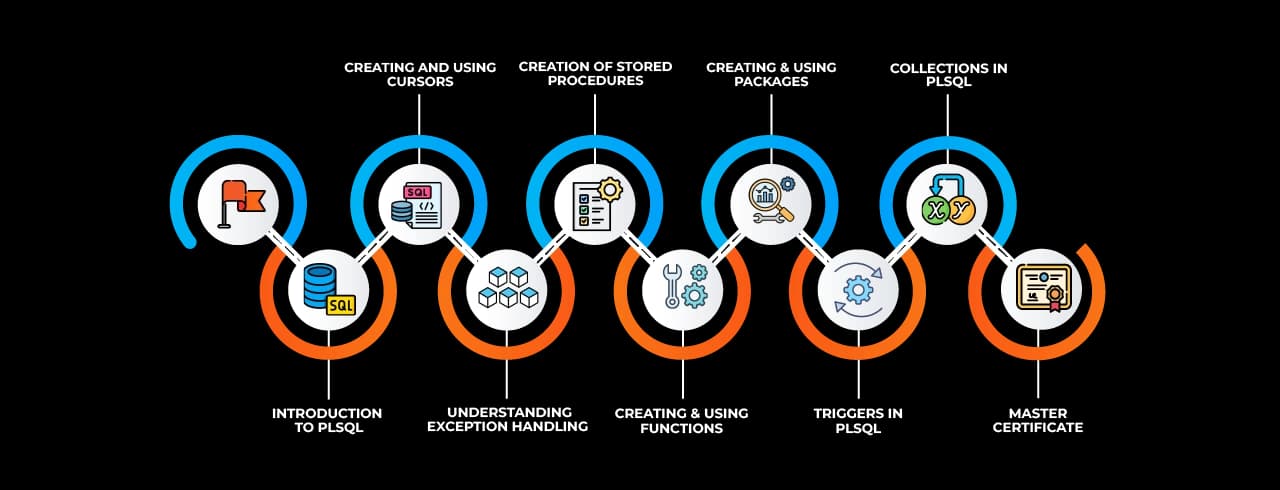
Introduction to PL/SQL iconIntroduction to PL/SQLOverview of PL/SQL, structure, and database programming advantages.
Understanding Exception Handling iconUnderstanding Exception HandlingManaging errors gracefully using predefined and user-defined exceptions.
Creation of Stored Procedures iconCreation of Stored ProceduresDefining reusable blocks of PL/SQL code to perform specific tasks.
Creating & Using Functions iconCreating & Using FunctionsWriting functions to return values and enhance modularity in PL/SQL.
Creating & Using Packages iconCreating & Using PackagesGrouping related procedures, functions, and variables into modular units.
Triggers in PL/SQL iconTriggers in PL/SQLAutomating database actions in response to events like inserts, updates, or deletes.
Collections in PL/SQL iconCollections in PL/SQLUsing arrays, nested tables, and associative arrays to handle multiple data elements.
Creating and Using Cursors iconCreating and Using CursorsHandling query result sets efficiently using explicit and implicit cursors.

Why Choose SevenMentor PL/SQL

Empowering Careers with Industry-Ready Skills.

Specialized Pocket Friendly Programs as per your requirements

Specialized Pocket Friendly Programs as per your requirements

Live Projects With Hands-on Experience

Live Projects With Hands-on Experience

Corporate Soft-skills & Personality Building Sessions

Corporate Soft-skills & Personality Building Sessions

Digital Online, Classroom, Hybrid Batches

Digital Online, Classroom, Hybrid Batches

Interview Calls Assistance & Mock Sessions

Interview Calls Assistance & Mock Sessions

1:1 Mentorship when required

1:1 Mentorship when required

Industry Experienced Trainers

Industry Experienced Trainers

Class Recordings for Missed Classes

Class Recordings for Missed Classes

1 Year FREE Repeat Option

1 Year FREE Repeat Option

Bonus Resources

Bonus Resources

Curriculum For PL/SQL

BATCH SCHEDULE

PL/SQL Course

Find Your Perfect Training Session

Jan 4 - Jan 10

2 sessions
04
Sun
Classroom/ Online
Weekend Batch
10
Sat
Classroom/ Online
Weekend Batch

Jan 11 - Jan 17

1 sessions
12
Mon
Classroom/ Online
Regular Batch

Jan 18 - Jan 24

1 sessions
19
Mon
Classroom/ Online
Regular Batch

Learning Comes Alive Through Hands-On PROJECTS!

Comprehensive Training Programs Designed to Elevate Your Career

Employee Management System

Employee Management System

Order Management System

Order Management System

Student Information System

Student Information System

Banking System

Banking System

Library Management System

Library Management System

No active project selected.

Transform Your Future with Elite Certification

Add Our Training Certificate In Your LinkedIn ProfileLinkedIn

Our industry-relevant certification equips you with essential skills required to succeed in a highly dynamic job market.

Join us and be part of over 50,000 successful certified graduates.

Student 1
Student 2
Student 3
Student 4
Student 5
Join 15,258 others learning today
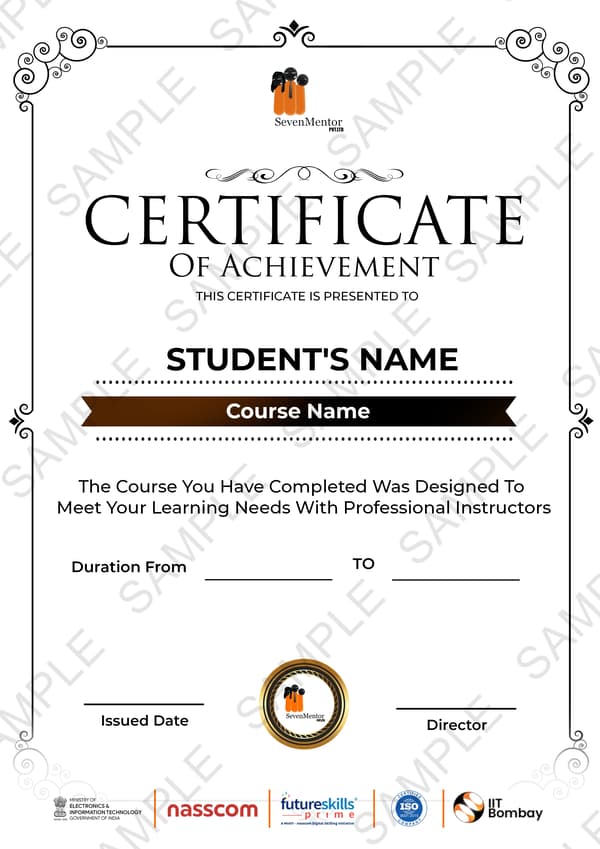
Certificate Preview

KEY Features that Makes Us Better and Best FIT For You

Expert Trainers

Industry professionals with extensive experience to guide your learning journey.

Comprehensive Curriculum

In-depth courses designed to meet current industry standards and trends.

Hands-on Training

Real-world projects and practical sessions to enhance learning outcomes.

Flexible Schedules

Options for weekday, weekend, and online batches to suit your convenience.

Industry-Recognized Certifications

Globally accepted credentials to boost your career prospects.

State-of-the-Art Infrastructure

Modern facilities and tools for an engaging learning experience.

100% Placement Assistance

Dedicated support to help you secure your dream job.

Affordable Fees

Quality training at competitive prices with flexible payment options.

Lifetime Access to Learning Materials

Revisit course content anytime for continuous learning.

Personalized Attention

Small batch sizes for individualized mentoring and guidance.

Diverse Course Offerings

A wide range of programs in IT, business, design, and more.

Course Content

About PL/SQL

Structured Query Language, or SQL, has long been the backbone of relational database management systems. However, when it comes to advanced functionality and procedural capabilities within Oracle databases, PL SQL (Procedural Language SQL) becomes a crucial tool. With the increasing reliance on robust backend systems and enterprise-level data management, the demand for professionals skilled in PL SQL has seen a substantial rise. For individuals and professionals in Akola seeking to enhance their database programming expertise, PL SQL classes in Akola offer a gateway to mastering this essential language.


Why Learn PL SQL?

PL SQL extends SQL by incorporating procedural constructs like loops, conditions, and exceptions. These features make it possible to write full-fledged programs to automate tasks, handle complex data manipulations, and enforce business logic within the database itself. Unlike standard SQL, which is declarative, PL SQL allows for the use of variables, control structures, and error handling, providing more flexibility and power to developers.

Oracle Database, which uses PL SQL as its procedural extension, is extensively used in industries like banking, telecommunications, healthcare, and government. Organizations rely on PL SQL for creating stored procedures, triggers, packages, and functions that ensure efficient and secure data operations. With this landscape in mind, it is evident that PL SQL is not just an optional skill but a necessity for those aiming to establish a strong foothold in the field of database development and administration.


Scope of PL SQL in Akola

Akola, known for its educational institutions and growing IT interest, is gradually embracing digital transformation. As local businesses, startups, and even government projects begin to integrate more IT-centric operations, the requirement for skilled database professionals becomes increasingly apparent. PL SQL Course in Akola is gaining traction as more organizations begin using Oracle-based solutions for data management and analytics.

This surge creates ample opportunities for students and IT professionals who invest in upskilling through structured learning. A well-designed PL SQL training can help learners understand both fundamental and advanced concepts, enabling them to take up roles such as database developer, data analyst, Oracle developer, and even systems integrator.


Curriculum Overview of PL SQL Training in Akola

The curriculum offered in SevenMentor PL SQL training in Akola is usually comprehensive, covering every critical concept from scratch to advanced application. Starting with the basics of relational databases and SQL syntax, students are introduced to procedural constructs like control flow statements, cursors, and exception handling. From there, the course progresses to more advanced topics such as stored procedures, functions, packages, and triggers.

Hands-on projects and real-time case studies are often incorporated into the training programs to ensure practical exposure. This experiential learning process helps students apply theoretical knowledge to solve real-world challenges, a quality that is highly valued by employers. Students also learn about optimizing PL SQL code, debugging practices, and performance tuning, making them job-ready from day one.


About SevenMentor

For individuals keen to invest their time and energy in quality learning, choosing a proper training provider is essential. Among the many providers available, SevenMentor stands out as the best training institute for PL SQL Training because of its excellence, industry-relevant curriculum, and seasoned trainers.

SevenMentor has established a niche as a technical education provider. SevenMentor is recognized for offering customized training modules, current content, and practical project exposure. Trainers at SevenMentor are experienced professionals who bring real-time situations to the classroom, so students are not only exam-ready but also workplace-ready.

In PL SQL courses in Akola, SevenMentor ensures practical knowledge through lab sessions, code debugging practices, and performance evaluation. Their learning system is aimed at addressing the requirements of both starter-level as well as middle-level learners. Be you a college student, a fresh graduate, or an employed individual, flexible batch timings and weekend batches enable you to achieve your learning aspirations without interrupting your schedule.


Industry-Relevant Training Methodologies

The methodology adopted by SevenMentor includes instructor-led sessions, hands-on coding practice, and real-time project execution. Students are encouraged to solve problems independently and think critically, fostering a learning environment that mirrors real-world job scenarios. Each module concludes with assessments that test the learner’s understanding and application of concepts.

In addition to core PL SQL components, students are also introduced to Oracle’s development environment, best practices in data security, and standard documentation techniques. This holistic approach ensures that graduates of the PL SQL training in Akola are equipped to handle end-to-end database operations in any enterprise environment.


Career Opportunities After PL SQL Training

The career prospects after completing PL SQL classes in Akola are promising. Organizations across industries require professionals who can manage large datasets, design efficient database procedures, and ensure secure data handling. Upon completing the course, candidates can apply for roles such as PL SQL Developer, Oracle Developer, Data Analyst, Database Administrator, and Software Engineer with a specialization in database systems.

Certification from a well-known institution such as SevenMentor can greatly improve the resume of a candidate. It lends credibility and authenticity to their skills, and they become the first choice at the time of recruitment. Several organizations also consider candidates who have received professional training in known settings favorably because it ensures them of the technical skills and problem-solving capacity of the candidate.


Project-Based Learning for Maximum Retention

One of the standout features of the PL SQL training provided by SevenMentor is the emphasis on project-based learning. Students are required to complete mini-projects at the end of each module, culminating in a capstone project that simulates a real-time industrial problem. These projects involve designing procedures, writing and optimizing complex queries, developing triggers, and managing exceptions effectively.

This style of learning not only reinforces theoretical concepts but also enhances a learner’s confidence. It equips them with the ability to handle assignments in professional settings and adapt to different industry requirements. For those considering PL SQL in Akola as a career pathway, this practical exposure serves as a critical stepping stone.


Support Beyond the Classroom

In addition to classroom learning, SevenMentor offers placement assistance, resume-building sessions, and mock interviews. The institute has tie-ups with multiple IT firms and regularly hosts job fairs, enabling students to connect directly with potential employers. Their alumni network also plays a significant role in mentoring fresh graduates and opening up avenues for internships and full-time employment.

This post-training support ensures that students are not abandoned once the course is complete. The team keeps guiding and supporting learners until they are placed in appropriate positions successfully.

Selecting a professional course in PL SQL is a tactical decision for anyone who wants to establish a sound career in database management. Since companies now depend so much on data-driven decisions, PL SQL is a skill that has become essential. Akola, with its mounting integration of technology and enhanced IT awareness, offers a rich setting for such a professional setup. Whether you are beginning your career or need to upskill, taking PL SQL courses in Akola can prove to be a game-changer.

SevenMentor, the top training center for PL SQL Training in Akola, offers a carefully crafted learning journey with a combination of theoretical expertise and practical experience. Its focus on real-world applications, topped with post-course assistance, ensures that students are thoroughly equipped to face industry challenges. Investing in PL SQL courses in Akola is not just acquiring a skill you are creating a foundation for long-term success in the IT sector.


Online Classes

SevenMentor offers comprehensive online PL SQL training modules. This is particularly beneficial for working professionals, students residing in remote areas, or anyone unable to attend on-site classes due to personal constraints.

The online version of PL SQL training in Akola includes live instructor-led sessions, downloadable resources, cloud-based practice labs, and regular assessments. These sessions are interactive, allowing students to ask questions, share screens, and collaborate with peers. Recorded sessions are also available for revision or for those who miss live classes.


Corporate Training

SevenMentor provides corporate PL SQL training in Akola tailored to organizational needs. These programs are custom-designed after understanding the existing skill gaps, project requirements, and business objectives.

Companies looking to build or enhance their database management teams can opt for in-house training programs conducted by SevenMentor’s expert trainers. These sessions can be held on-site or remotely, depending on the company’s preference. The course content is modular and can be adapted to specific use cases or organizational workflows.

Frequently Asked Questions

Everything you need to know about our revolutionary job platform

1

Is PL/SQL superior to SQL?

Ans:
Furthermore, PL/SQL allows us to send a complete block of statements to the database at once, whereas SQL only performs one query at a time. This lowers network traffic. Hence, PL/SQL is superior to SQL.
2

How complex is PL/SQL?

Ans:
The acronym PL/SQL stands for Procedural Language for SQL. It was developed by Oracle Corporation in the early 1990s to improve SQL. It is a combination of SQL and procedural features that are easy to read and write. PL/SQL is a high-performance transaction processing language that is fully portable
3

What are the prerequisites for PL SQL?

Ans:
PL/SQL Developer supports Windows Vista, Windows 7, Windows 8, Windows 10, and Windows 11. Oracle Server versions 7.x, 8.x, 8i, 9i, 10g, 11g, 12c, 18c, 19c, 21c, and 23c are all supported on any platform.
4

Is PL SQL simple or complicated?

Ans:
PL/SQL stands for "Procedural Language for SQL". Oracle Corporation created it in the early 1990s to improve SQL performance. It combines SQL with procedural characteristics, making it simple to read and write.
5

Is PLSQL or Java faster?

Ans:
When I ran a performance test, I was surprised to learn that Java was twice as fast. The test is straightforward: read 1 million values from a table and return the sum (via a loop). Both have been implemented as stored procedures. PL/SQL takes 20 seconds, Java 12 seconds.
6

What are the prerequisites for PL SQL?

Ans:
PL/SQL Developer supports Windows Vista, Windows 7, Windows 8, Windows 10, and Windows 11. Oracle Server versions 7.x, 8.x, 8i, 9i, 10g, 11g, 12c, 18c, 19c, 21c, and 23c are all supported on any platform
7

Is it easy to gain job by only using PL SQL skills?

Ans:
It is indeed possible to find employment opportunities that focus exclusively on PL/SQL skills. With a solid understanding of Oracle PL/SQL (Procedural Language/Structured Query Language), many career options become available, particularly in the fields of database development and management.
8

Is PL/SQL considered a back-end language?

Ans:
Back-end programming languages include Python, Java, Node.js, and PL/SQL, as well as database systems like Oracle, MySQL, and MongoDB. Generally, back-end developers are tasked with building Application Programming Interfaces (APIs) that enable communication between the front-end and back-end systems.
9

Is PL/SQL exclusive to Oracle?

Ans:
Other relational database systems utilize their own specific languages or extensions. PL/SQL is not applicable to databases outside of Oracle
10

Is PL/SQL necessary for data science?

Ans:
SQL is fundamental for any data science position that involves interacting with databases, whereas PL/SQL is more pertinent for tasks that demand it.
11

What's the scope of pL SQL?

Ans:
The scope of PL/SQL includes PL/Scope, which offers insights into the dependencies among tables, views, and PL/SQL units. This detailed level of information can serve as a migration assessment tool to gauge the magnitude of necessary changes.
12

Is it possible to find jobs solely with PLSQL?

Ans:
Once you become proficient in Oracle PL/SQL (Procedural Language/Structured Query Language), numerous career paths open up, especially in the areas of database development and management.
13

What does a package mean in PL/SQL?

Ans:
A package is a schema object that consolidates related PL/SQL types, variables, constants, subprograms, cursors, and exceptions. A package is compiled and saved within the database, allowing multiple applications to utilize its contents.
14

What is the use of PL SQL in data base?

Ans:
PL/SQL allows you to combine SQL commands with procedural elements. Using PL/SQL, you can develop and execute PL/SQL program units like procedures, functions, and packages.
15

Explain PL SQL?

Ans:
Typically, PL/SQL program units fall into categories such as anonymous blocks, stored functions, stored procedures, and packages. What exactly is a PL/SQL function? In straightforward terms, PL/SQL is a programming language utilized for handling data within databases.

Explore Other Demanding Courses

No courses available for the selected domain.

PL SQL Courses in Akola | SevenMentor