What Does an AI Architect Do, and Why Is It the Most In-Demand Role in IT?
Enterprises have complex Artificial Intelligence (AI) engineering challenges, while they have business challenges that they need to address with their AI solutions. The enterprise AI architect is key to strategic bridge building between AI engineering and business. This architect role is distinct from the software engineer, the data scientist who builds predictive models, the Business Intelligence (BI) analyst, and others. This architect creates a blueprint (end-to-end architecture) that links together AI/ML algorithms, cloud, and data for large and complex enterprise systems. Large numbers of companies across many industries are seeking to integrate AI into their decision-making processes, including automated decision-making and generative capabilities. They are looking for certified AI solution architects. Having an AI Solution Architect certification is evidence that you can architect end-to-end intelligent systems that create immediate value for your business.
- Designing Scalable System Architecture: Architect end-to-end solutions with machine learning, deep learning, and natural language processing, integrating with legacy systems and current databases on cloud infrastructure.
- Selecting the Ideal AI Tech Stack: Choosing the best programming framework, cloud platform services (e.g. AWS, Azure, GCP) and data pipeline, in addition to hardware accelerators (e.g. GPUs, TPU) to build large-scale enterprise applications.
- Assessing ROI and Business Case: Translate commercial challenges into architecture and establish KPIs to ensure that return on investment is being achieved on every AI model deployed.
- Processes for governing models: For MLOps processes, setting up MLOps pipelines, automated retraining, monitoring model drift and several others. Also: Compliance with data protection regulations.
- Bridging Technical and Executive Leadership: Leadership that speaks to the ability to make decisions, make architectural trade-offs, and discuss safety protocols with a group of non-technical C-suite stakeholders and board members.
- Salary Growth is at an All-Time High: Leading AI Solution Architects are paid top dollar. The average AI architect salary in India is around ₹24L to ₹45L+ per year for experienced architects and designers.
- Future-Proofing Your Career: This transition to an AI Architect role enables you to exit the typical roles of a software developer or system administrator to move into a leadership role. In an automated age, a role like this will still be needed.
What Essential Skills and Technologies Will You Master in a Professional AI Architect Course?
The path to transition from general developers to high-level system strategists is to first build out strong foundations in both technology and architecture, then proceed to learn the relevant frameworks. A highly specialized AI in Architecture course will provide the much-needed hands-on experience to design, build, and operate a multi-layered architecture using AI agents within enterprise systems to automate operations. You will learn to tackle the trade-offs of AI and other enterprise technology and to design, build, and operate systems that scale to handle millions of end user queries. More importantly, to take full ownership of an organization’s IT transformation strategy and to communicate it effectively to top IT recruiters and hiring managers.
You get hands-on expertise in the following key architectural modules as part of a highly structured, industry-aligned architecture course:
- Foundational Python Math and Programming: Advance in the application of core mathematical and programming fundamentals to problem solving with the aid of computational tools for optimizing.
- Machine Learning Architecture Design: Learn to select, train and validate supervised, unsupervised and reinforcement learning systems as part of a larger machine learning architecture.
- Deep Learning and Neural Network Topology: Multi-layer neural networks (feedforward networks) and convolutional and recurrent networks (for computer vision and hard-to-analyze time-series data). Programming language: Python. Deep learning frameworks: TensorFlow and PyTorch.
- Generative AI and Large Language Models : (LLMs)—Learn about AI solution architecture for generative AI. Specialized training in solution architecture for large language models (LLMs) and their integration into architectures. Students will also learn prompt engineering for LLMs.
- Enterprise AI Framework Deployment: Learn how to deploy AI frameworks using various MLOps toolkits, Docker containerization, Kubernetes orchestration, and other enterprise cloud infrastructure systems such as AWS, Google Cloud Platform, etc.
- Agentic Workflows and Autonomous Systems: Specialized solution architecture for multi-agent workflows, such as RAG (Retrieval-Augmented Generation with frameworks like LangChain and LangGraph). Build self-correcting digital agents that execute complex workflows.
- Earn a Valued AI Architect Certification: This allows you to show off your newfound skills as an ai architect certification. After completion of this program, you will have full-stack AI platform skills that can be used by most global employers.
- Natural Language Processing (NLP) & Vision Systems: Build scalable language modeling pipelines and real-time computer vision systems to process documents and recognize images.
- Real-World Enterprise Capstone Projects: You apply your newly acquired theoretical knowledge to real-world industry problems, building, e.g., a sentiment analysis system, a predictive engine architecture, and/or customer recommendation services.
- A Curriculum that will match the demands of Industry: The architecture AI course that one takes will make sure that the AI architect's skills have been honed to the needs of the modern enterprise and are thus relevant to the current hiring needs of industry.
- Ethical AI, Governance and Security: Learn about data privacy, preventing bias, model explainability of models and API security in enterprise environments.
Career Path: Roles & Growth for AI Architects in Enterprises.
Designing autonomous IT infrastructure is a very lucrative career change. Global tech corporations as well as start-ups are shifting from legacy software to intelligent automation. The demand for certified solution architects holding an AI Solution Architect certification is increasing dramatically. Industry reports show that professionals who can bridge enterprise-level design and live deployment of models are paid top dollar in top tech locations around the world. In this structured AI in Architecture course, you will learn to design end-to-end solutions for global corporations and get placed in very high-paying and growing jobs and careers.
- Enterprise AI Solution Architect: Architect AI solutions for enterprises worldwide and manage cloud-based resources to maximize their use. Salary Range: ₹25 LPA – ₹45+ LPA.
- MLOps Systems Architect: Design end-to-end MLOps architecture and operate and manage continuous integration and delivery of enterprise machine learning models for real-time monitoring and feedback. These professionals get to earn an average salary of ₹20 LPA-₹38 LPA.
- Generative AI Solutions Lead: We help enterprises fine-tune Large Language Models (LLMs) like transformer-based architectures. We also build out Retrieval-Augmented Generation (RAG) workflows and vector databases for conversational systems.
- Cloud AI Infrastructure Engineer: The engineer will design, deploy and manage hybrid cloud environments such as AWS, Azure and Google Cloud Platform to enable models to run and data to move around for end users.
- AI Product Strategy Consultant: Working with the C-suite of non-technical organizations to provide input on the use of AI, govern its use in an ethical manner, and assist in determining the cost and value of large-scale digital transformations.
What Are the Career Pathways, Salary Growth, and Enterprise Job Roles for AI Architects?
Artificial intelligence architecture is a high-paying and influential field in the current technology landscape. The requirement for professionals with Enterprise AI Architect skills is increasing rapidly as companies move from experimental pilots to production deployment across industries such as healthcare, finance, e-commerce, and SaaS. Having an AI Solution Architect certification is key to demonstrating strategic skills required to manage large digital initiatives. Whether you want to lead a tech team as a principal architect or design algorithms for enterprise solutions specialists, an AI architect course is a career catalyst with high earning potential.
To get an idea of the possible career development in AI architecture, take a look at the primary job roles and growth opportunities in the corresponding market:
- Enterprise AI Solution Architect: The Enterprise AI Solution Architect builds and runs end-to-end intelligent systems. He or she develops and implements the high-level system strategy and chooses hardware and/or cloud-based infrastructure to run the resulting systems.
- Generative AI Architect—Generative AI System Architect: Designs, builds and tests proprietary applications using customized LLMs. Examples of applications and pipelines designed by these architects are generative AI systems such as AI artists using LLMs, Retrieval-Augmented Generation (RAG) systems, and autonomous software agents.
- Lead MLOps Lead & AI Infrastructure Engineer: Deploy AI frameworks and manage AI models, perform automated CI/CD and resource management on multicloud environments.
- Chief Technology Officer (CTO) / AI Strategist: Long-term innovation for enterprises,, including definition of technology strategy and corresponding budget as well as measurement of corresponding business growth and reduction of operational costs for deployed AI solutions.
- Salary: This IT job pays extremely high salaries, which are significantly higher than these for corresponding positions of software developers, for example.
- Diverse Sector Opportunities: Apply specialized skills in a variety of sectors, including fintech, autonomous systems, automated manufacturing, healthcare diagnostics and many global consulting firms.
- Influence Business Decisions: Be the subject matter expert for AI influence and decision-making for senior management to reduce costs and create new revenue streams through AI.
- Long-Term Job Security: Such jobs have long-term scope and are far from being affected by routine automation of tasks performed by AI and robots.
- Global Remote and Remote: Get certified in professional AI architecture and get ready to work from home or relocate worldwide to the best tech companies as an AI architect.
Who Should Enroll in an AI Architecture Training Program, and What Are the Prerequisites?
Transitioning to the role of an AI architect can be challenging but incredibly rewarding for individuals who put in the time and effort to acquire relevant skills to design systems and architectures that support AI.If you are looking for a way to upgrade your technical skills to be able to support high-level system engineering, then enrolling in an AI architecture training is a great place to start. Whether you are a software developer, data scientist, or IT manager, our ai in architecture course will provide you with the required structured learning to make a change in your career.
The following learning path is tailored for the following professional profiles:
- Software Engineers & Full-Stack Developers: Move from writing feature code for applications to designing complex autonomous enterprise systems and intelligent backend architectures.
- Data Scientists & ML Engineers: Take your skills beyond model training and hyperparameter optimization, and learn to manage and integrate systems to deploy large-scale models in cloud-based, enterprise environments.
- Database Administrators & Data Engineers: You will learn how to design vector databases, data pipelines and real-time streaming architectures for next-generation AI systems.
- IT Managers & Technical Project Leaders: IT Managers and Technical Project Leaders will gain enough knowledge to understand what to look for when selecting a vendor and how to manage engineers that are working on complex AI/ML projects.
- Cloud & DevOps Engineers: The training can be used to specialize further in the area of ML Architecture Design for cloud-based systems as well as design and automate MLOps pipelines.
- System Architects & Tech Leads: Move enterprise architecture frameworks into AI-driven models that support real-time processing and self-learning.
- The foundations of Python programming—for basic Python syntax, data manipulation with libraries, and object-oriented programming.
- Mathematics & Data Logic: For those with basic knowledge of linear algebra, statistics, and problem solving using logic, we can accelerate their learning process.
- Career Switchers with Tech Aptitude: We have ambitious IT professionals who have basic knowledge of technology and are looking for hands-on learning experience to build a live project portfolio.
- Rapid Mid-Career Salary Acceleration: IT professionals can look forward to a 60% to 120% boost in salary when moving from software engineering or system administration roles to enterprise architecture roles.
- Global Employment Mobility: You can get a job in any part of the world and do a remote consultancy in countries where architecture-verified technical architecture credentials are in high demand.
Why SevenMentor Is the Preferred Choice to Maximize Salary Growth and Placement Success
Get ready to upgrade your theoretical knowledge into practical engineering skills in real-life projects. SevenMentor Institute, a top-rated training center for students and working professionals in IT & AI, leverages and capitalizes on unprecedented salary growth in AI sector through an updated technology and industry-specific program content in line with global technology trends, mapped into specific key competencies required to get hired into best AI-enabled Enterprise Architects roles in industry today.
- Placement Support: Placement support, interview preparation support, resume support (optimization workshop), etc., to place candidates in suitable jobs.
- Industry-Aligned Learning: Our real-world scenario studies, hands-on enterprise projects, system whiteboarding, and learning from the best industry practitioners.
- Expedited Career Advancement: SevenMentor’s training helps working professionals, within a short span of time, get promoted to senior design roles with large hikes in their salaries.
- Strong Corporate Network: SevenMentor Institute has established long-term hiring partnerships with some of the largest MNCs, leading IT consultancies and some of the most innovative startups in India across key technology hubs.
Integration with Other IT Courses
Web development skills can be enhanced by combining them with other in-demand technologies. Many training institutes, including SevenMentor, offer integrated learning paths with courses such as:
Learning these technologies alongside web development can significantly boost your career prospects.
Frequently Asked Questions (FAQs)
1. What is an AI Architect Course and Who Should Take it?
The AI Architect Course is a 6-month training program designed for tech professionals such as software developers, data scientists, cloud engineers, and technical team leads who wish to transition into solution architecture roles (sometimes referred to as enterprise architects) to earn higher salaries.
2. How does earning an ai architect certification boost my tech salary?
The value of an AI Architect Certification lies in the fact that it proves that the certified holder is able to manage complex intelligent end-to-end systems. Hence, certified solution architects have much higher salaries than software developers, as they are major factors in determining company strategy and RoI in operations.
3. Do I need prior coding experience to take an ai in architecture course?
B. Prior knowledge required for the course (Architectural Logic to Advanced AI Architectures)?
4. What tools and frameworks are covered in an ai solution architect certification program?
Hands on experience with Industry leading Tools & Frameworks. We use Python, PyTorch, TensorFlow, LangChain, vector databases (Pinecone), Docker, Kubernetes and cloud AI infrastructure on AWS and Google Cloud platforms.
5. How does SevenMentor assist with job placements after completing the course?
SevenMentor supports students to get placed in top MNCs and start-ups in the country through various placement activities like helping students in writing resumes and helping in communication grooming through mock interviews including technical round of White Board type in MNCs for job placements.
6. What sets SevenMentor apart from other training centers?
SevenMentor training centers offer a highly interactive, corporate style, workshop style of training. Senior technology professionals with hands-on experience of managing live enterprise systems conduct classes. We have small batch sizes to ensure that each student receives one-to-one attention, has the opportunity to go through real-life projects and have aggressive placement drive in place to assist students in obtaining jobs of their choice.
Related Links:
Anthropic AI Tool
What is Writesonic
Career Objectives For Fresher
Resume Tips For Software Developers
Do visit our channel to know more: SevenMentor
 Generative AI (Generative Artificial Intelligence) refers to a class of AI models that can create new content, such as text, images, audio, video, and even code.
  Unlike traditional AI, which primarily analyzes and classifies data, generative AI learns patterns from large datasets and generates new, human-like outputs based on that learning.
 SevenMentor has specialized trainers who educate you on Generative AI
-1744727040985.webp&w=3840&q=75)
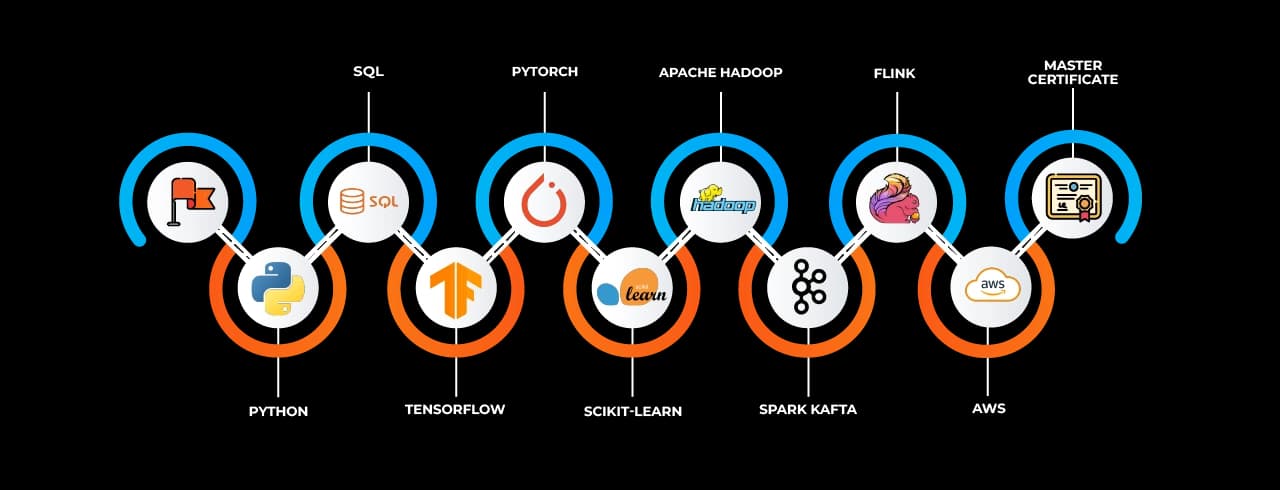
 PytorchA deep learning framework offering dynamic computation graphs and flexibility.
 Microsoft AzureExplore cloud computing with Microsoft Azure for hosting, deploying, and managing applications.
 FlaskFlask
 Apache SparkBig data processing engine for large-scale analytics and real-time processing.
 Hadoop Open-source framework for distributed storage and big data processing.
 Docker A containerization platform that enables developers to package, distribute, and run applications in isolated environments.
 Kubernetes A container orchestration system for automating deployment, scaling, and management of containerized applications.
 AWSAmazon Web Services, a cloud computing platform offering scalable infrastructure and services.
 Kafka (Real-Time Data Streaming) – Enable real-time data ingestion, processing, and streaming with Apache Kafka.
 Python A versatile programming language widely used for data analysis and modeling.
 SQL A database language for querying and managing structured data.
 Matplotlib A visualization library for creating charts and graphs.
 Seaborn An advanced data visualization library built on Matplotlib.
 Scikit-learnA machine learning library for predictive modeling and analysis.
 TensorFlow A framework for building and deploying deep learning models.
 Power BIA business intelligence tool for data visualization and reporting.
 Tableau A data visualization software for creating interactive dashboards.
 FastAPIA high-performance framework for building APIs in machine learning and AI applications.
 FlinkA framework for real-time stream and batch processing of data.
 Google CloudA cloud platform providing computing, storage, and AI services.
 KerasA high-level deep learning API running on TensorFlow.
 BERTA transformer-based NLP model for contextual understanding of text.
 GPTA generative AI model for text-based applications like chatbots and content creation.
 Hugging Face TransformersA library for working with pre-trained NLP models like BERT and GPT.