GPU Cloud and AI Infrastructure Engineer Course in Pune

feature-iconBoost Your IT Career with Hands-On Cloud Computing Training by SevenMentor

feature-icon Stay Ahead in the Digital Era with Advanced Cloud Computing Skills

feature-icon Learn Cloud Deployment, Management, and Automation from Expert Trainers

020-71173071

Start Today!

CONSULT WITH OUR ADVISORS

  • Course & Curriculum Details
  • Flexible Learning Options
  • Affordable Learning
  • Enrollment Process
  • Career Guidance
  • Internship Opportunities
  • General Communication
  • Certification Benefits

Request Call Back

Loading...

Learning Curve for GPU Cloud & AI Infrastructure Engineer
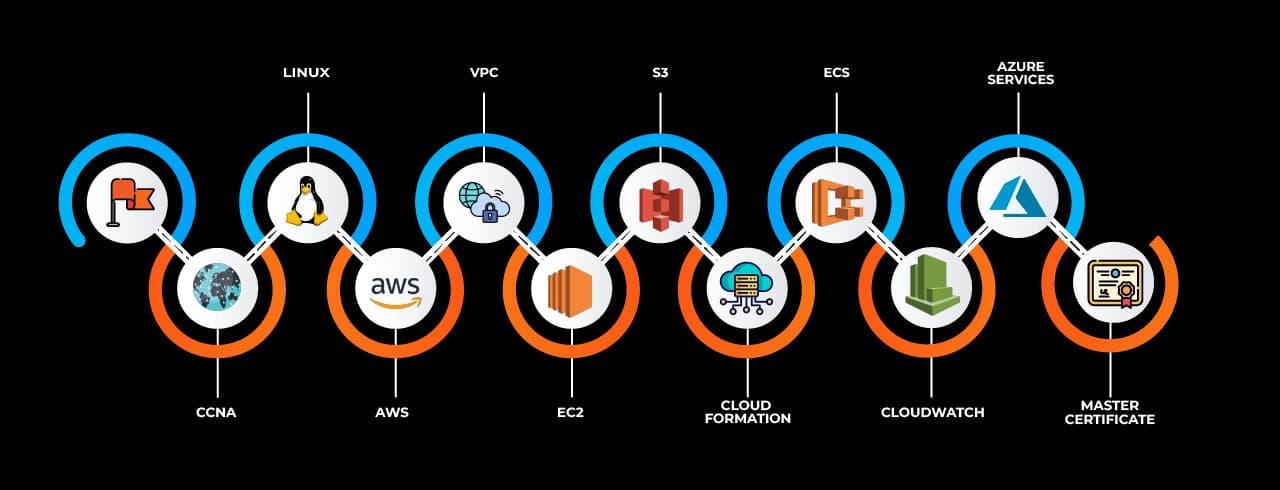
Learning curve for GPU Cloud & AI Infrastructure Engineer

Master In GPU Cloud & AI Infrastructure Engineer Course

OneCourseMultipleRoles

Empower your career with in-demand data skills and open doors to top-tier opportunities.

Cloud Architect
DevOps Engineer (Multi-Cloud)
Cloud Security Engineer
Cloud Operations Manager
Cloud Consultant
Cloud Systems Administrator
Cloud Application Developer
Cloud Migration Specialist
Cloud Product Manager
Cloud Engineer
Site Reliability Engineer (SRE)

Skills & Tools You'll Learn -

AWS SDKs iconAWS SDKsSoftware development kits that allow developers to integrate AWS services into applications using various programming languages.
CloudWatch  iconCloudWatch A monitoring service that collects and analyzes logs, metrics, and events for AWS resources and applications.
CloudTrail  iconCloudTrail A service that records AWS API calls for governance, compliance, and operational auditing.
IAM (Identity and Access Management) iconIAM (Identity and Access Management) A security service for managing user access, permissions, and authentication in AWS.
Cognito  iconCognito A service for adding authentication, authorization, and user management to web and mobile applications.
Inspector  iconInspector An automated security assessment service that detects vulnerabilities in AWS workloads.
Macie  iconMacie A data security service that uses AI to discover and protect sensitive data across AWS.
CloudHSM  iconCloudHSM A managed hardware security module for cryptographic key storage and encryption.
CloudFormation  iconCloudFormation An infrastructure-as-code service that automates the provisioning of AWS resources using templates.
OpsWorks  iconOpsWorks A configuration management service that automates deployments using Chef and Puppet.
CodeDeploy  iconCodeDeploy A service that automates application deployments across AWS and on-premises environments.
CodePipeline  iconCodePipeline A CI/CD service that automates the build, test, and deployment processes for applications.
Elastic Beanstalk iconElastic BeanstalkA platform-as-a-service (PaaS) that simplifies application deployment and management.
DynamoDB  iconDynamoDB A fully managed NoSQL database service for high-speed and scalable applications.
IaaS (Infrastructure as a Service) iconIaaS (Infrastructure as a Service)A cloud model that provides virtualized computing resources over the internet.
PaaS (Platform as a Service) iconPaaS (Platform as a Service)A cloud model offering development and deployment environments without managing infrastructure.
SaaS (Software as a Service) iconSaaS (Software as a Service)A cloud model where software applications are delivered over the internet on a subscription basis.
AWS Management Console iconAWS Management ConsoleAn easy-to-use web-based console of AWS services and resources
AWS CLI iconAWS CLI A command-line interface tool that automates various AWS-related processes through the execution of commands and scripts.
S3 (Simple Storage Service) iconS3 (Simple Storage Service)A flexible object storage service designed for secure data storage and retrieval.
EBS (Elastic Block Store) iconEBS (Elastic Block Store)A robust block storage service tailored for EC2 instances.
RDS (Relational Database Service) iconRDS (Relational Database Service)A fully managed relational database service that supports various database engines.

Why Choose SevenMentor GPU Cloud & AI Infrastructure Engineer

Empowering Careers with Industry-Ready Skills.

Specialized Pocket Friendly Programs as per your requirements

Specialized Pocket Friendly Programs as per your requirements

Live Projects With Hands-on Experience

Live Projects With Hands-on Experience

Corporate Soft-skills & Personality Building Sessions

Corporate Soft-skills & Personality Building Sessions

Digital Online, Classroom, Hybrid Batches

Digital Online, Classroom, Hybrid Batches

Interview Calls Assistance & Mock Sessions

Interview Calls Assistance & Mock Sessions

1:1 Mentorship when required

1:1 Mentorship when required

Industry Experienced Trainers

Industry Experienced Trainers

Class Recordings for Missed Classes

Class Recordings for Missed Classes

1 Year FREE Repeat Option

1 Year FREE Repeat Option

Bonus Resources

Bonus Resources

Curriculum For GPU Cloud & AI Infrastructure Engineer

BATCH SCHEDULE

GPU Cloud & AI Infrastructure Engineer Course

Find Your Perfect Training Session

Aug 30 - Sep 5

1 session
05
Sat
Classroom/ Online
Weekend Batch

Sep 6 - Sep 12

2 sessions
06
Sun
Classroom/ Online
Weekend Batch
07
Mon
Classroom/ Online
Regular Batch

Sep 13 - Sep 19

1 session
14
Mon
Classroom/ Online
Regular Batch

Learning Comes Alive Through Hands-On PROJECTS!

Comprehensive Training Programs Designed to Elevate Your Career

 VPC Setup with Security Groups

VPC Setup with Security Groups

IAM Role & Policy Management

IAM Role & Policy Management

Static Website Hosting on S3

Static Website Hosting on S3

Serverless Portfolio Website

Serverless Portfolio Website

 Multi-Tier Architecture

Multi-Tier Architecture

No active project selected.

Transform Your Future with Elite Certification

Add Our Training Certificate In Your LinkedIn ProfileLinkedIn

Our industry-relevant certification equips you with essential skills required to succeed in a highly dynamic job market.

Join us and be part of over 50,000 successful certified graduates.

Student 1
Student 2
Student 3
Student 4
Student 5
Join 15,258 others learning today
Certificate Preview

KEY Features that Makes Us Better and Best FIT For You

Expert Trainers

Industry professionals with extensive experience to guide your learning journey.

Comprehensive Curriculum

In-depth courses designed to meet current industry standards and trends.

Hands-on Training

Real-world projects and practical sessions to enhance learning outcomes.

Flexible Schedules

Options for weekday, weekend, and online batches to suit your convenience.

Industry-Recognized Certifications

Globally accepted credentials to boost your career prospects.

State-of-the-Art Infrastructure

Modern facilities and tools for an engaging learning experience.

100% Placement Assistance

Dedicated support to help you secure your dream job.

Affordable Fees

Quality training at competitive prices with flexible payment options.

Lifetime Access to Learning Materials

Revisit course content anytime for continuous learning.

Personalized Attention

Small batch sizes for individualized mentoring and guidance.

Diverse Course Offerings

A wide range of programs in IT, business, design, and more.

Course Content

Why GPU Cloud Skills Actually Matter in Pune Right Now

You can usually tell when a team has moved past basic AI experimentation. The questions change.

Instead of asking whether a model can run they start asking why inference suddenly takes 180 ms. Someone notices the GPU bill jumped after a training job retried several times. Another engineer is trying to work out why an H100 cluster is sitting at low utilisation even though the queue says there is plenty of work waiting.

That is the kind of work happening around Pune's larger product teams and GCCs.

Along the Hinjewadi-Baner corridor and across the city's growing technology ecosystem there is increasing demand for people who understand what happens underneath the AI application itself. A team may need someone to provision Google Cloud GPU resources or choose between an A100 and an H100 or work out whether a TPU makes more sense for a particular workload. Then comes the less glamorous part — keeping the infrastructure available and watching costs when jobs run longer than planned.

This is where GPU Cloud Computing becomes a proper infrastructure discipline.

It is not the same as opening a notebook and attaching a GPU. You have to think about scheduling and containers and storage and networking and recovery and the amount of money being spent while the workload is running.

A few things are pushing this demand locally:

  • Pune's GCC expansion — Global engineering centres are building larger AI and ML teams and those teams need infrastructure people behind the models.
  • Product companies are scaling AI workloads — Once a model becomes part of a product the infrastructure has to handle real traffic rather than occasional experiments.
  • GPU costs are forcing better engineering decisions — A wasted CPU cycle is one thing. Leaving an H100 sitting idle for hours is a very different bill.
  • Multi-cloud work is becoming more common — Engineers are increasingly expected to understand how AWS and Azure and GCP handle accelerated workloads.

That is why a GPU Cloud & AI Infrastructure Engineer Course in Pune can be useful for engineers who want something more specialised than general cloud training.

The interesting problems begin after the GPU is already running.


Career Path & Salary Realities for GPU Cloud Engineers in Pune

There is not one fixed route into GPU infrastructure work. Someone might begin in DevOps and move toward ML platforms after spending enough time around Kubernetes. Another person may start in cloud infrastructure and gradually take on model-serving and GPU scheduling work.

The salary curve tends to widen as that experience becomes more specialised.

Experience Level

Typical Role

Pune Salary Range (₹/year)

Core Responsibility

0–2 years

Junior GPU Cloud / ML Infrastructure Engineer

₹6–10 LPA

Provisioning and monitoring and basic MLOps support

3–5 years

GPU Cloud Engineer / AI Infra Specialist

₹14–22 LPA

Architecture and cost optimisation and multi-cloud GPU planning

6–10 years

Senior AI Infrastructure Engineer / Lead

₹25–40 LPA

Platform ownership and scaling decisions and vendor management

10+ years

Principal Engineer / AI Infra Architect

₹45 LPA+

Infrastructure strategy and large-scale technical decisions and team leadership

The bigger jump usually happens once someone has handled production workloads rather than only training experiments. Pune's product companies and GCCs are competing with hiring markets such as Bengaluru and Hyderabad for engineers with this mix of infrastructure and AI experience.

Someone who has worked with GCloud GPU resources and understands the difference between A100 and H100 behaviour can often have a stronger conversation about infrastructure costs and workload fit.

And then there are the awkward production problems.

A distributed training job gets stuck halfway through. GPU memory is technically available but scheduling still does not place the workload where it should. A model serves correctly on one instance type and behaves differently after a migration.

Those situations are hard to bluff your way through.

A common progression is DevOps or cloud engineering first and then ML infrastructure or platform work. After that some engineers move toward architecture and some stay closer to hands-on GPU operations.

The more responsibility you take for the whole platform the less the role is about simply provisioning machines and the more it becomes about deciding how the system should run.


Core Skills and Curriculum Covered in the GPU Cloud Program

The first thing to understand about GPU infrastructure is that the GPU itself is only one piece of the setup. You can have an H100 available and still end up wasting most of its capacity because the scheduler is wrong or the container cannot see the device or the workload is constantly waiting on storage.

That is why the curriculum moves through the stack instead of treating GPU computing as one isolated topic.

Foundational Layer — Weeks 1–4

  • GPU architecture basics — CUDA and memory hierarchy and the way parallel workloads are divided across GPU resources.
  • GPU cloud computing — Looking at shared and dedicated GPU instances and the practical difference between them.
  • AWS and Azure and GCP GPU services — Getting familiar with the way each provider handles accelerated workloads and where their instance options differ.
  • Linux and containers — Refreshing the parts of Linux and Docker that become important when the workload is an ML training or inference job.

Intermediate Layer — Weeks 5–10

  • Cloud GPU provisioning — Working through quotas and region choices and the little restrictions that can stop a deployment even when the machine type looks available.
  • Kubernetes on GPU nodes — Using device plugins and scheduling rules and understanding why a GPU can sit unused even when jobs are waiting.
  • GPU cost engineering — Looking at spot capacity and committed-use discounts and autoscaling instead of treating the cloud bill as someone else's problem.
  • Storage for AI workloads — Designing storage paths for large datasets and checkpoints and model artifacts without turning I/O into the bottleneck.

Advanced Layer — Weeks 11–16

  • Multi-cloud GPU planning — Working out what happens when one provider or region becomes unavailable and how a workload can move without starting the whole project again.
  • Inference optimisation — Getting into batching and quantisation and KV-cache management and the practical compromises behind lower latency.
  • GPU observability — Using Prometheus and Grafana along with custom telemetry to find out whether the problem is compute or memory or networking.
  • GCloud GPU labs — Setting up TPU workloads and managing Google Cloud GPU clusters through actual hands-on exercises.

Capstone Project

The final four-week build puts the pieces together. Each learner designs and deploys a multi-region inference platform for a simulated product workload and then stress-tests it under changing traffic.

The project includes scaling playbooks and cost reporting and architecture documentation.

So it is not just “here is the cluster you built.”

You also have to explain what happened when the workload was pushed harder.


What Makes SevenMentor's GPU Cloud Program Genuinely Different?

A screenshot of an AWS GPU instance does not teach you much about what happens when the workload suddenly refuses to start. The same goes for Kubernetes diagrams. They look simple until a scheduler ignores the node you expected or a driver update breaks the container runtime.

SevenMentor's approach is much more lab-heavy.

  • Live cloud GPU environments — Core exercises run against real GPU infrastructure rather than pretending a simulator is the same as a production environment.
  • Production-focused instructors — The people teaching the course bring experience from actual AI infrastructure work and can explain why a setup failed rather than simply repeating the documented configuration.
  • Small cohorts — Batches are capped at 12 learners so there is enough room for individual lab feedback when something goes wrong.
  • Pune-focused career mapping — The course is built with the kind of GPU and AI infrastructure work appearing in Pune's GCCs and product companies in mind.
  • Timings for working professionals — Weekday evening and weekend batches make it possible to keep working while learning the infrastructure stack.
  • Placement connections — SevenMentor's placement support includes introductions to hiring contacts in the product and GCC ecosystem where these skills are relevant.

The practical difference becomes obvious during troubleshooting.

Nobody is going to hand you a neat answer and say which setting caused the issue. You have to look at the logs and the node state and the workload and then work backwards.

That experience is difficult to reproduce with slides alone.

You need to break something first.


Demand Drivers and Real-World Application in Pune

Pune's GCC growth is one of the bigger reasons GPU infrastructure work is getting more attention here. AI teams are moving from experiments into production and that changes the infrastructure problem completely.

A model that worked for a small internal test may behave very differently once thousands of users are sending requests to it.

The tricky cases are already familiar to engineers working on these systems:

  • A fine-tuning job on H100s retries repeatedly and the cloud bill jumps before anyone notices.
  • An inference service slows down after a model change because the batching settings were never adjusted for the new workload.
  • A company tries to shift a TPU workload to another cloud and discovers that the architecture was more provider-specific than expected.
  • A team has enough GPU capacity on paper but poor scheduling leaves part of it unused.

These are not particularly exciting problems to put on a brochure.

They are the problems that make the infrastructure work valuable.

Pune's product companies along the Hinjawadi and Baner belt and its expanding GCC ecosystem are working on AI systems that need more than ordinary cloud infrastructure. AI-first startups are adding another layer of demand.

There is a trade-off here too. Going very deep into one provider's GPU stack can make you useful quickly. Broader multi-cloud knowledge usually takes longer to build but can become valuable when companies want flexibility across AWS and Azure and GCP.

That is also why the course connects with adjacent areas.

SevenMentor's Data Engineering Course covers the data pipeline side that feeds many AI systems. The Cloud Computing Course is useful when you need stronger general cloud fundamentals before going deeper into accelerated workloads.


Enroll in the Next GPU Cloud & AI Infrastructure Engineer Batch

The upcoming Pune batch has limited lab capacity because the practical sessions use real GPU resources. Each learner gets dedicated access during the scheduled work rather than trying to share one environment among a large classroom.

Weekday evening and weekend options are available for professionals who cannot step away from their current roles.

You can contact SevenMentor's admissions team to check the next batch and go through the prerequisites and the curriculum before enrolling. The Pune branch can also help you figure out where you fit in the program if you already have experience with DevOps or cloud infrastructure.

It is also worth comparing the course with other AI-focused options before deciding.

SevenMentor's Agentic AI Course and Agentic AI & Gen AI Course in Pune may make more sense if your interests sit closer to application-level AI rather than infrastructure.

The SevenMentor Blog also covers GPU cloud trends and infrastructure engineering and hiring-related topics for people who want to keep up with how the field is changing.

The simple test is this: Do you want to build the models? Or do you want to build the infrastructure that lets those models run reliably? This course is aimed at the second problem.


SevenMentor nowadays also offers integrated learning paths with courses such as:


Learning these technologies can significantly boost your career prospects. 


Frequently Asked Questions

1. I have some Linux knowledge but I have never worked with GPUs. Am I going to be completely lost in this course?

No. GPU experience is useful but it is not treated as a prerequisite. The early part of the program covers the hardware and cloud basics before getting into scheduling and distributed workloads.

2. Which cloud gets the most attention during the practical sessions?

Google Cloud gets the deepest treatment because of the GPU and TPU work included in the labs. AWS and Azure are also part of the program so you can compare how accelerated workloads are handled across providers.

3. What would I actually be able to apply for after finishing the course?

Roles can include GPU Cloud Engineer and ML Infrastructure Engineer and AI Platform Engineer and MLOps-focused positions. Your previous experience matters here because someone coming from DevOps may take a slightly different route from someone already working in ML infrastructure.

4. I am already doing DevOps. Is this really going to add anything or is it mostly more Kubernetes?

There is definitely Kubernetes involved but the focus is different once GPUs enter the picture. Scheduling and device access and inference serving and GPU cost control create problems that ordinary application clusters do not always have.

5. Does SevenMentor actually help with placement for these specialised roles?

Yes. The support includes resume work and mock interviews and introductions through the institute's hiring network. The actual role you land still depends on your background and project work and how you perform in the interviews.

6. Are the GPU labs really running on live cloud infrastructure?

Yes for the core practical work. Real quotas and real GPU resources and actual troubleshooting scenarios are used while simulations are kept for situations where repeatedly breaking production-scale infrastructure would simply be too expensive.

7. I work full time in Pune. Can I realistically fit the course around my job?

That is why the program has evening and weekend batches. The full course runs for about 16 weeks so the idea is to keep the workload manageable while you continue working.

8. Will we cover the cost side of running H100 and A100 workloads?

Yes. GPU cost engineering is part of the program and includes spot capacity and committed-use discounts and autoscaling and quota management. The point is to understand why a workload costs what it does and where the waste is coming from.

Frequently Asked Questions

Everything you need to know about our revolutionary job platform

1

What topics are covered in the Cloud Computing Course in?

Ans:
The course includes cloud architecture, virtualization, networking, security, DevOps integration, serverless computing, cloud automation, and hands-on training with AWS, Azure, and GCP.
2

Why choose SevenMentor Institute for Cloud Computing training?

Ans:
SevenMentor offers industry-focused training with expert instructors, real-world projects, hands-on labs, flexible batches, and 100% placement assistance for career growth.
3

What tools and technologies will I learn in the Cloud Computing Classes?

Ans:
You'll work with AWS, Microsoft Azure, Google Cloud, Terraform, Kubernetes, Docker, Jenkins, CI/CD pipelines, Ansible, and cloud security tools.
4

Does the Cloud Computing Certification include real-world projects?

Ans:
Yes, students gain hands-on experience through real-world cloud deployment projects, infrastructure automation, security management, and performance optimization.
5

How long is the Cloud Computing Course?

Ans:
The duration varies between 2 to 6 months, with weekday and weekend batches available for both beginners and professionals.
6

What career opportunities are available after completing the Cloud Computing Classes?

Ans:
After completion, you can explore roles like Cloud Engineer, Solutions Architect, DevOps Engineer, Site Reliability Engineer (SRE), and Cloud Security Specialist.
7

Is this Cloud Computing Course suitable for beginners?

Ans:
Yes, the course is designed for both freshers and IT professionals, starting from the basics and progressing to advanced cloud concepts.
8

How does Cloud Computing Certification add value to my career?

Ans:
A certification validates your cloud expertise, making you a strong candidate for high-paying IT roles in cloud infrastructure and services.
9

Can I take Cloud Computing Classes online?

Ans:
Yes, SevenMentor offers both classroom and online training, providing flexibility for learners across different locations.
10

What makes SevenMentor the best institute for Cloud Computing training?

Ans:
SevenMentor stands out due to expert trainers, hands-on training, industry-aligned syllabus, real-world projects, and a strong placement network
11

Will I receive study materials during the Cloud Computing Certification program?

Ans:
Yes, students receive comprehensive study materials, including notes, assignments, practical exercises, and recorded sessions.
12

Does the Cloud Computing Course cover advanced topics like DevOps and automation?

Ans:
Absolutely! The course includes Infrastructure as Code (IaC), CI/CD pipelines, Kubernetes, cloud security, and cloud automation techniques.